Last updated November 21, 2026
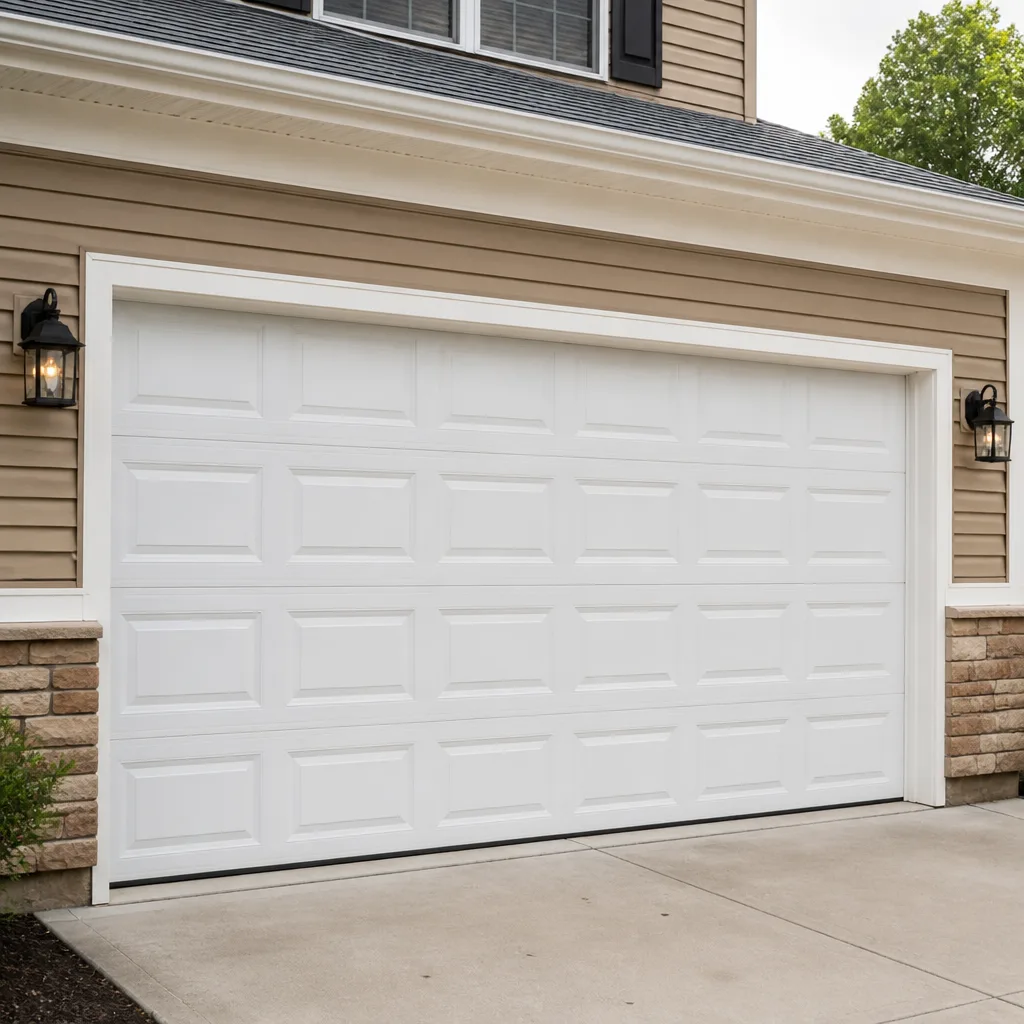 Raised-panel steel
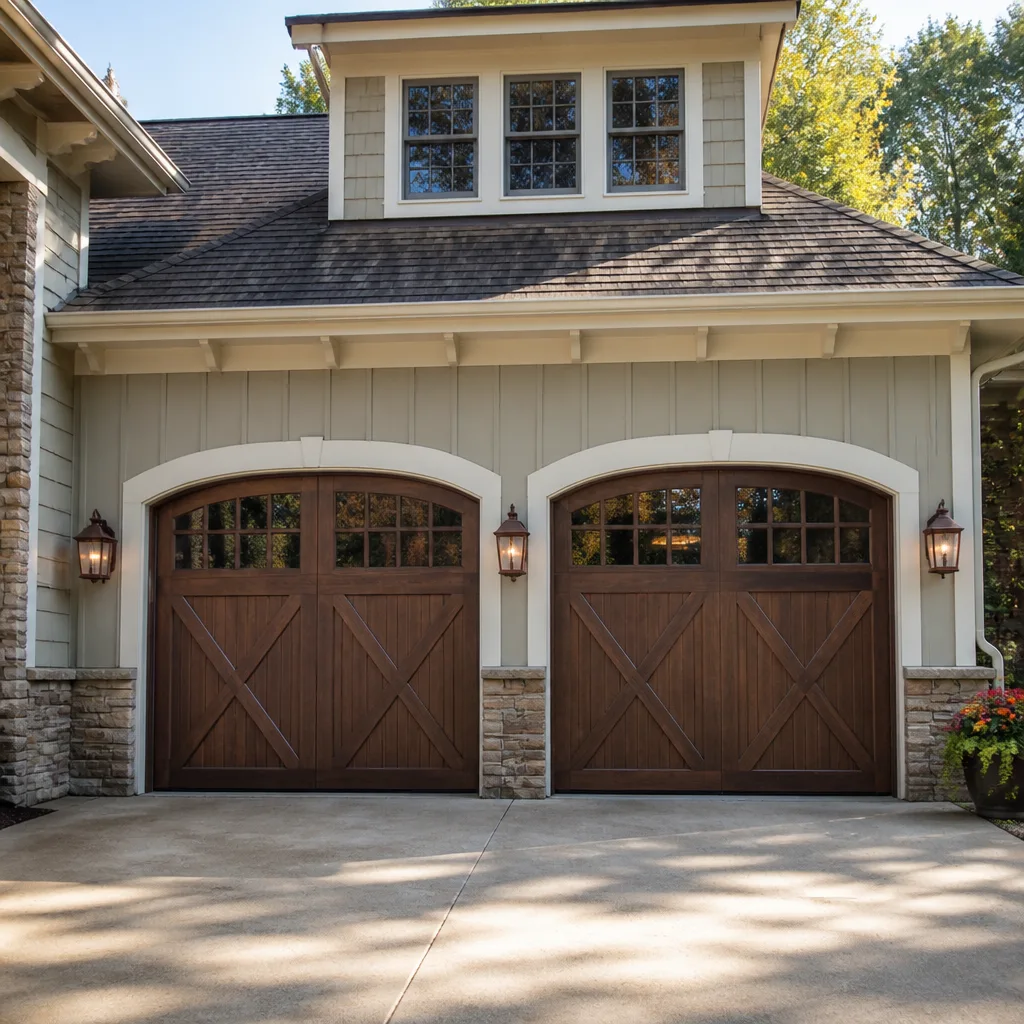 Carriage house
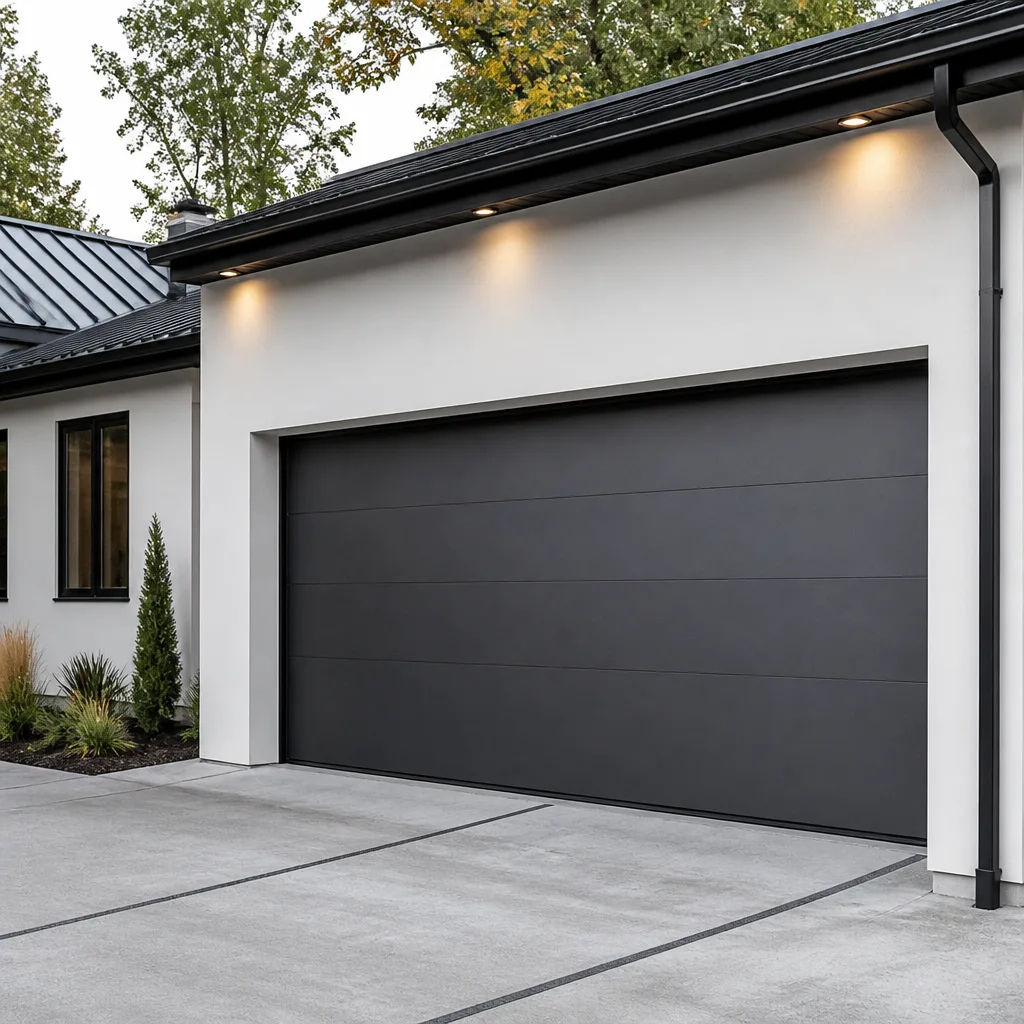 Modern flush
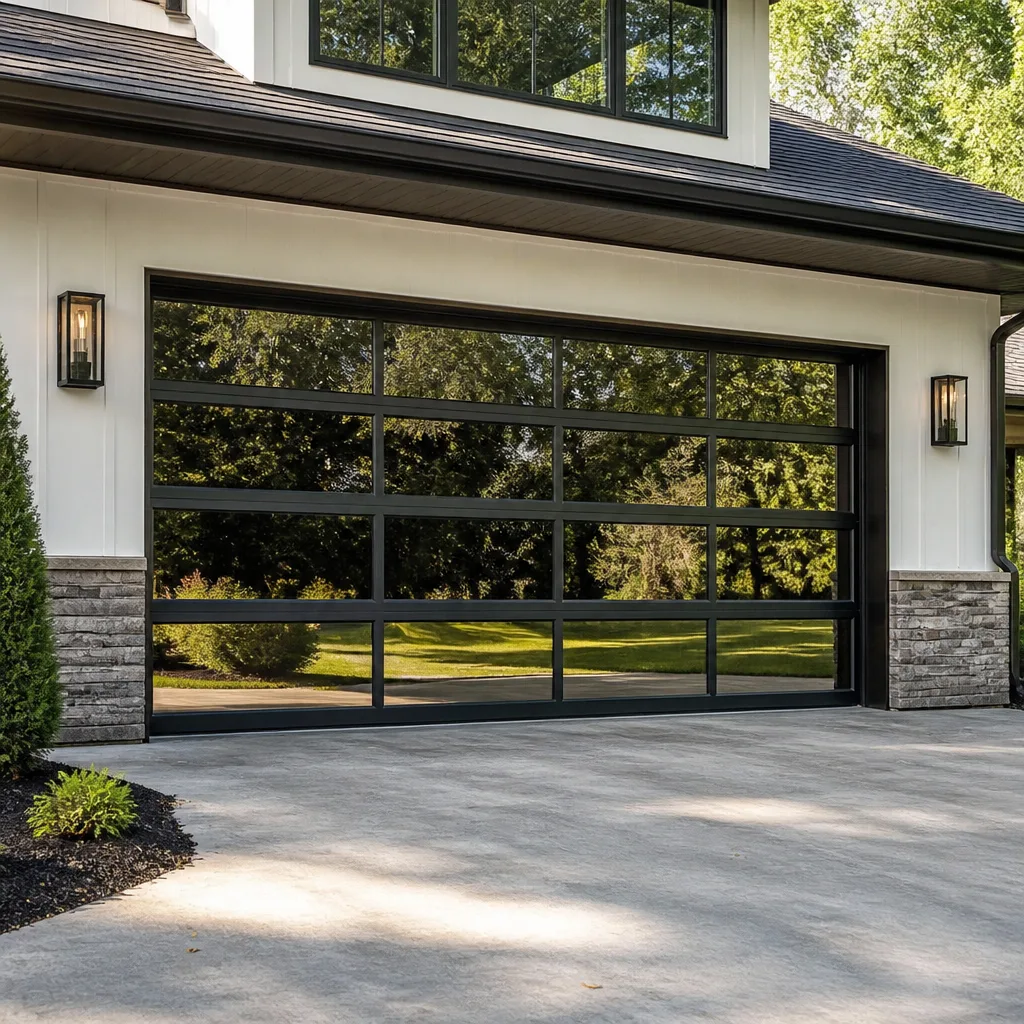 Full-view glass
 LiftMaster openers
 Chamberlain openers
Full 25-point door and opener safety check with every visit - springs, cables, rollers, tracks, and your LiftMaster or Chamberlain opener included
You get a price before we start. It does not change when the pro arrives.
Get your free estimateDIY vs Professional Garage Door: The Cleveland Park Homeowner’s Decision Guide
Most DIY-versus-pro debates about garage doors revolve around money, and that framing misses the real dividing line. A fully wound torsion spring stores enough energy to cause a fatality if it’s released improperly. That isn’t a liability disclaimer tacked onto a sales pitch. It’s the actual mechanical reason spring and cable work sits in a different category from every other task on your door, no matter how handy you are. In this guide we sort garage door jobs into three honest buckets – safe to do yourself, risky but possible, and do not attempt – and explain the physics behind each call. We’ll also walk through realistic costs, parts sourcing for Cleveland Park homeowners, and how to recognize the moment a repair has outgrown its original scope.
Quick Answer
Do the simple, low-energy work yourself: lubricating moving parts, replacing a rubber bottom seal, tightening loose hinge bolts, and clearing an obstruction that’s tripping the safety sensor. Leave anything involving torsion springs, extension springs, cables, drums, or the door’s balance to a professional. The danger comes from stored energy, not from complexity, and a spring under tension can injure or kill a trained person who makes one small error. For anything touching that hardware, call a specialist. For the rest, the guide below tells you where the line falls in Cleveland Park homes.
Styles & brands we work with
- Raised-panel steel
- Carriage house
- Modern flush
- Full-view glass
- LiftMaster openers
- Chamberlain openers
Table of Contents
- Why Garage Door Safety Is a Physics Problem, Not a Skill Problem
- Three Buckets: What You Can Do, What’s Risky, What’s Off-Limits
- The Real Cost Math of DIY Garage Door Repair in Cleveland Park
- Why DIYing on Cleveland Park’s Older Doors Carries Extra Risk
- How to Tell a Repair Has Escalated Mid-Job
- Warranty and Insurance Implications of DIY Work
- Opener Problems vs. Door Problems: How to Tell the Difference
- When to Call a Professional
Why Garage Door Safety Is a Physics Problem, Not a Skill Problem
A torsion spring is a steel coil that’s been wound hundreds of times under load. It holds the weight of a door that can run several hundred pounds, and it releases that stored energy through the cables and drums that raise and lower the panels. When the system is intact, physics works in your favor. When someone unwinds a spring without the right winding bars and the right sequence, or cuts a cable that’s under tension, the energy goes wherever it wants. That’s the whole distinction, and it’s the reason we treat spring repair differently from a rattle or a seal that won’t sit flat.
The garage door repair jobs that come through our Cleveland Park calls break down along that line. Lube, seals, hinges, sensor alignment, and remote programming are low-energy. You’re dealing with a door that’s balanced and at rest. Springs, cables, and drums are high-energy. You’re dealing with a system that is actively trying to return to its unwound state. Every garden-variety task sits on one side of that line or the other, and it doesn’t matter how many YouTube videos you’ve watched or how steady your hands are.
The three forces at work in every door
- Torsion or extension spring tension – the counterweight that makes the door feel light. This is the energy that causes serious injury.
- Cable tension – a coiled cable under load can whip if it’s cut or slips off a drum.
- The door’s own weight – a section that comes off a track or falls from a partially open position can do real damage to a person or a car.
When those three are in balance, a garage door is one of the safest machines in a home. When one is compromised, the others carry more load and the system becomes unpredictable. That’s why diagnosis matters more than repair technique, and it’s why we handle both the mechanical side and the electrical side under one call – you shouldn’t have to sort out whether the issue is a spring or a garage door opener repair before you can get help.
Three Buckets: What You Can Do, What’s Risky, What’s Off-Limits
Here’s the task breakdown we give homeowners who ask whether they can handle it themselves. The classification follows the energy stored in the part, not the difficulty of the instructions.
Bucket 1: Safe to DIY
- Lubricating hinges, rollers, and tracks – a spray lubricant on moving metal, no stored energy involved.
- Replacing a bottom rubber seal – a trim piece that slides into a retainer on the bottom panel.
- Tightening loose hinge and bracket bolts – check torque and adjust, using a socket wrench.
- Clearing an obstruction tripping the safety sensors – repositioning the photo-eye lenses so they face each other and reflect.
- Reprogramming remotes and keypads – matching a new remote to an existing opener, whether it’s a LiftMaster or a Craftsman.
- Straightening a slightly bent track lip with a mallet – only on a door that’s fully down and closed with no tension on that section.
Bucket 2: DIY With Real Risk
- Replacing rollers and hinges on a balanced door – doable on an intact door, but a mis-seated roller can let a panel drop.
- Adjusting the opener’s travel limits and force settings – a wrong setting can make the safety reverse feature fail, which is a genuine hazard.
- Replacing a weather seal around the frame – simple, until you’re working near a track you might move out of alignment.
- Resetting a door that’s come off its track – only if the door is fully down and the spring has not been touched.
If you take on a Bucket 2 job, do it with the door closed and disconnected from the opener, and stop if anything feels heavier than expected.
Bucket 3: Do Not Attempt
- Replacing torsion springs – stored energy, high winding force, and no safe way to hold the load without proper winding bars.
- Replacing extension springs – these are under load along the track and can fail violently if handled wrong.
- Cutting or re-crimping a cable – a cable under tension can whip back at speed.
- Replacing drums or the center bearing plate – requires releasing the spring, which is the danger itself.
- Any repair on a door that’s hanging, crooked, or already under uneven tension – the system is already compromised and any adjustment shifts the load unpredictably.
Those five items are where we draw the hard line. Spring repair done safely is a job for a specialist with the tools and the sequence memorized, and we say that because the failure mode is injury, not a voided warranty.
The Real Cost Math of DIY Garage Door Repair in Cleveland Park
The honest version of the DIY math is that you save real money on the Bucket 1 tasks and lose money on anything else. A bottom seal and a can of lubricant cost little and take under an hour. A DIY roller swap on an older door often ends up costing more than a scheduled repair once you factor in a re-bent track or a door that won’t sit level afterward. Here’s the straight comparison for the Cleveland Park market.
- Lubrication and tune-up: DIY materials are a can of lubricant. A professional tune-up with inspection is a modest fixed price and catches worn rollers before they fail.
- Bottom seal replacement: DIY seal kit is inexpensive. Pro replacement runs more but includes the right retainer and a level install.
- Roller replacement: DIY rollers are cheap, but a misaligned door is a real cost. Pro replacement includes balance check.
- Opener repair or replacement: DIY diagnostics on a Genie or LiftMaster opener frequently gets you a new opener you didn’t need. Pro diagnostics identify the actual failed component.
- Spring replacement: Not a DIY project at any price. Call a specialist, get a written quote, and treat anything less as a warning sign.
Realistic time estimates for Bucket 1
- Lubrication: 20 – 30 minutes for a single door.
- Bottom seal: 30 – 45 minutes with the right retainer size.
- Sensor alignment: 15 minutes.
- Remote reprogramming: 10 minutes with the manual in front of you.
- Hinge bolt tightening: 15 – 20 minutes with a socket wrench and a step ladder.
Where the math tips toward a professional is anything that requires the door to be disconnected from the opener, or anything that requires you to be on a ladder under the door while it’s off the ground. On those jobs you’re paying for the confidence that the repair is done right. For a free estimate that tells you which bucket a specific repair falls into, call (833) 918-7067.
Why DIYing on Cleveland Park’s Older Doors Carries Extra Risk
Cleveland Park has a lot of homes with doors installed decades apart, and that history matters when the door needs service. The mechanical risks in the previous sections apply everywhere, but working on an older door in this neighborhood introduces variables that change the job mid-stream.
Non-standard spring sizes
Torsion springs are sized to the specific weight and height of the door, and older doors have springs the hardware store won’t stock. If you order a replacement size from a chart or a photo, you’ll likely get one that’s close but wrong. A spring that’s one wire gauge off changes how the door balances and how the opener has to work to lift it. The result is usually a door that binds, a motor that strains, and a second repair a few months later.
Deteriorated hardware that behaves unpredictably
Bolts on older doors may be rusted to the point of stripping, hinges may be worn enough that they no longer square up, and rollers can have flat spots that make the door jerk on its way up. On a newer door you’re replacing a known-size part. On a 25-year-old door you’re replacing a part that’s partially seized into its own bracket. That’s a different job, and it needs different tools in the truck before the first bolt is touched.
Header and track conditions that change the job
Cleveland Park’s housing stock includes a lot of prewar construction with garages that were retrofitted after the fact. Header conditions vary from house to house, and tracks were often mounted to whatever framing was available. When you start loosening hinges and brackets on a door like that, you’re not just removing hardware – you’re touching a mounting system that was installed with its own assumptions about the framing. A straightforward job can turn into a re-mounting job, and that’s before you’ve reached the spring.
If you’re evaluating a repair on an older door in Cleveland Park, we’d rather look at it once and tell you what it actually needs than have you find out halfway through. Cleveland Park’s older doors aren’t all of the same generation, and the correct approach depends on what the door is doing when it’s closed, not on what a parts catalog assumes. Our technicians have up to 11 years of experience and have worked on the full range of these systems, including Raynor and Wayne Dalton doors that are still in service around the neighborhood.
How to Tell a Repair Has Escalated Mid-Job
A repair gathers momentum. You start with a roller and end up under a door that won’t sit flat, and somewhere along the way you passed the point where stopping was the right move. Here are the specific signals that a job has left its original scope, and each one is a cue to stop rather than push through.
- You’re about to touch a spring. If the reason for the repair traces back to the spring, even indirectly, stop. Don’t loosen the spring to get at another part.
- The door won’t sit level with the opener disconnected. A door that won’t hold itself up when you pull the release cord is out of balance. Reconnecting the opener and closing it is the correct move, not a further adjustment.
- A cable has slipped off its drum. That cable is holding tension. Don’t try to pull it back over.
- You’ve removed a hinge and the panel drops. Put the hinge back in place and stop. A door with a fall risk needs a professional to re-seat it.
- The door comes off its track. A door that’s off a track is a hazard for anyone under it. Call a specialist.
- You’ve made an adjustment and the problem got worse. That’s the clearest stop signal. Reversal on a spring-loaded system without the right tools usually compounds the problem.
The right way to stop is: close the door if it will close, disconnect the opener so it can’t be activated remotely, and call for service. That includes an active Garage Door Repair Cleveland Park call if the door is stuck or unsafe. We treat a door that won’t move as a safety situation, not a scheduling one, and we handle emergency responses as a named part of what we do.
Warranty and Insurance Implications of DIY Work
Warranty terms on garage door openers usually condition coverage on professional installation and service, and most manufacturers will consider DIY tampering with springs or cables a grounds for denying a claim on a related component. If you’ve replaced a spring yourself, don’t expect the opener manufacturer to honor a motor warranty if the next failure traces back to door balance. We’ve seen this play out on Craftsman and LiftMaster units where a home-tuned door dragged the motor through a failure cycle, and the opener claim went nowhere.
Homeowner’s insurance is a separate question, and the answer depends on your policy. If a DIY repair leads to damage, most policies will still respond to the resulting loss, but the insurer may look at whether the work was done by a qualified professional when deciding what to cover. A safer approach is to keep the written estimate and the invoice for any spring or cable work so there’s a paper trail of who did what.
What a professional repair protects
- Opener warranty integrity. A qualified installation keeps the manufacturer’s coverage intact where the terms require it.
- Insurance documentation. You have a record of the work and who performed it.
- Brand-specific parts. We work with the manufacturer’s components on the systems we service, so a replacement part matches the original spec rather than a generic substitute.
- Future diagnosis. If a part fails later, the previous repair history is available to whoever inspects it.
When you want the manufacturer’s warranty to stay clean and the insurer to have a record, the safest route is a professional repair with a written invoice. That’s what we provide on every job.
Opener Problems vs. Door Problems: How to Tell the Difference
One of the most common DIY misdiagnoses we see is a homeowner replacing the opener when the actual failure is in the door. The opener is the easy thing to suspect because it’s electrical and it’s right there, but most “the door won’t open” calls trace back to the mechanical side: a broken spring, a snapped cable, a door that’s come off balance. The opener is doing its job; it’s trying to lift a door that’s now heavier than it was designed to handle.
Quick diagnostic
- Pull the release cord to disconnect the opener from the door.
- Lift the door by hand. If it’s very heavy or won’t stay up on its own, the problem is the door or the springs, not the opener.
- If the door moves easily by hand but the opener won’t run, the problem is on the electrical side: the opener, the sensor, the wall control, or the remote.
- If the opener runs but the door doesn’t move, the opener’s drive or the door’s connection to it is the likely culprit.
This is why we keep both halves of the system under one call. Whether the issue is a Raynor door with a worn spring or a LiftMaster opener that’s throwing a code, you don’t get bounced between a door contractor and an electrician while you wait. One call covers the whole system.
Common Mistakes to Avoid
- Trying to adjust a spring to fix a door that won’t close. A door that won’t close usually has a spring or balance problem, and turning the spring by hand without winding bars is exactly the scenario that causes injury. Call for service.
- Replacing the opener before diagnosing the door. Most “door won’t open” calls trace back to a mechanical failure, not the motor. A new opener on a broken door is money spent on the wrong part.
- Assuming a replacement spring from a hardware store will fit. Springs are sized to the door. A close-but-wrong spring drags the opener and shortens its life. Match the part to the door, not to a chart.
- Using a household lubricant on the tracks. Too thick a product attracts grit and binds the rollers. Use a lubricant rated for garage door hardware.
- Ignoring a door that’s started running ragged. A door that shudders, hesitates, or reverses for no reason is telling you something is wearing out. Skipping it is how a developing issue becomes an emergency call on a day you needed the car out.
- Assuming a bent track can be straightened in place with a door under load. A mallet on a loaded track shifts the load onto another part of the system. Close the door and disconnect it first.
- Handing the job to whoever’s cheapest without a written quote. A quote in writing, before work starts, is the difference between a repair and a surprise invoice. Insist on it.
See the difference
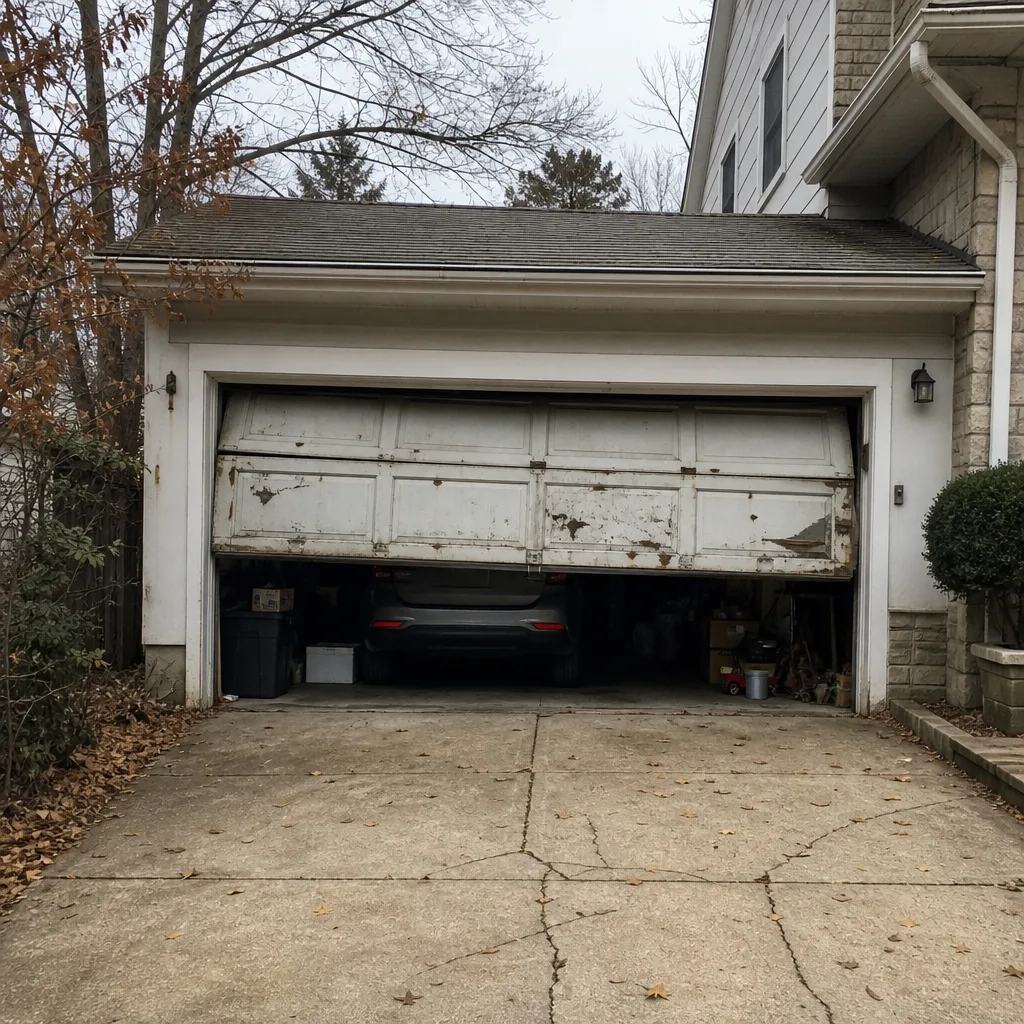 Before
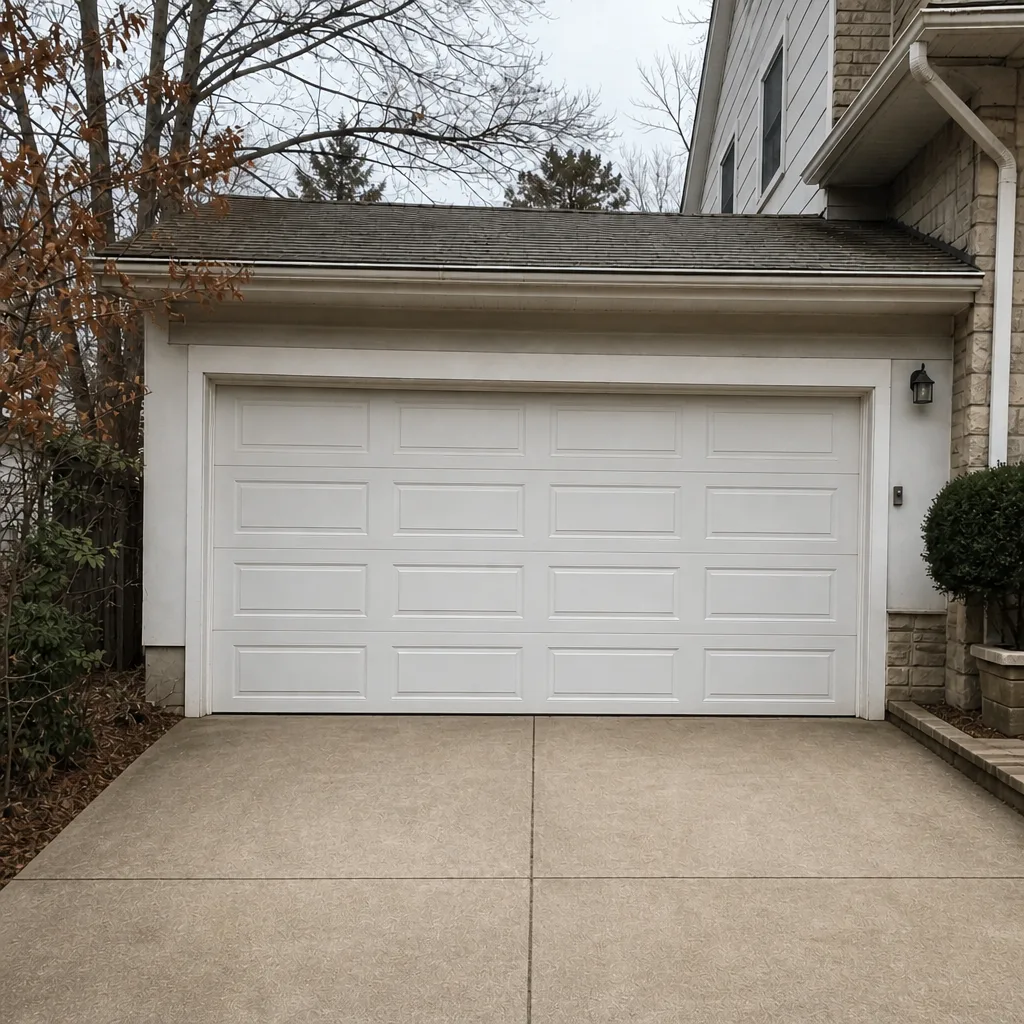 After
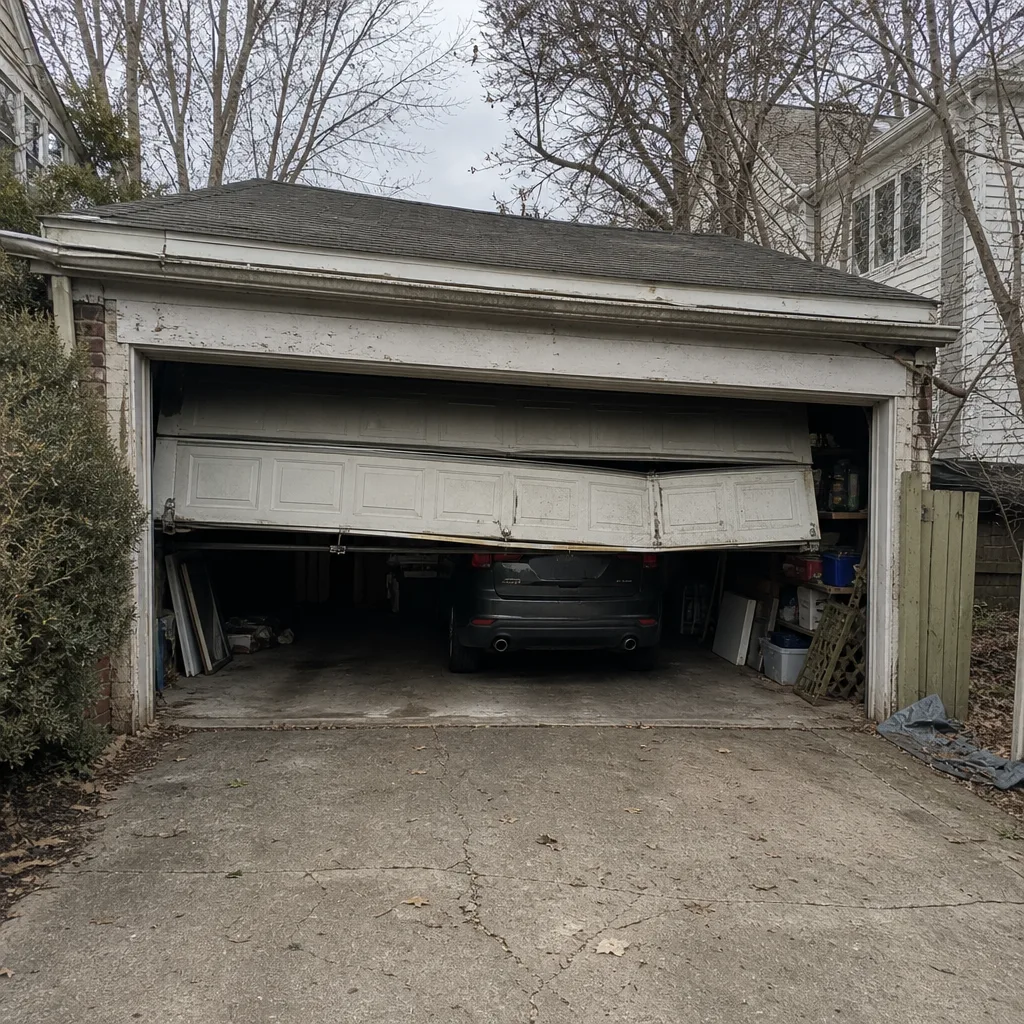 Before
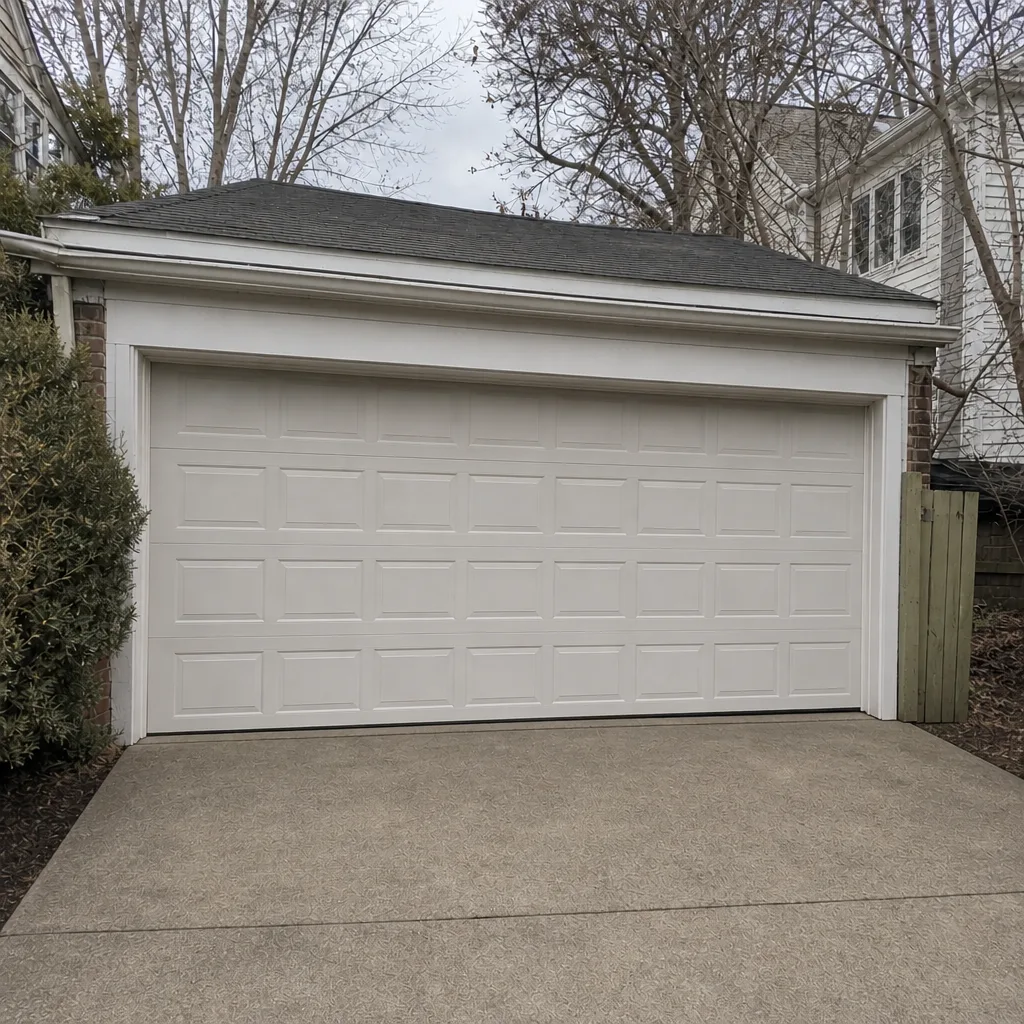 After
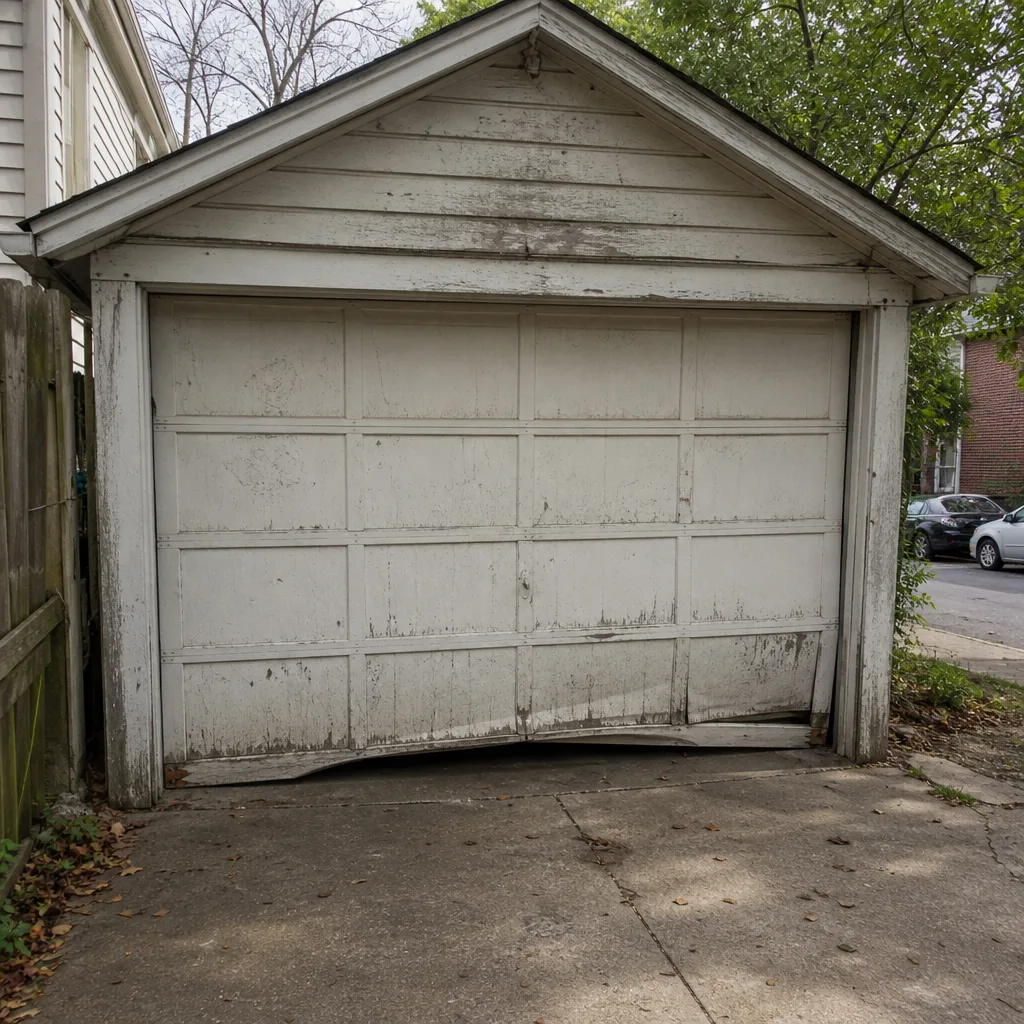 Before
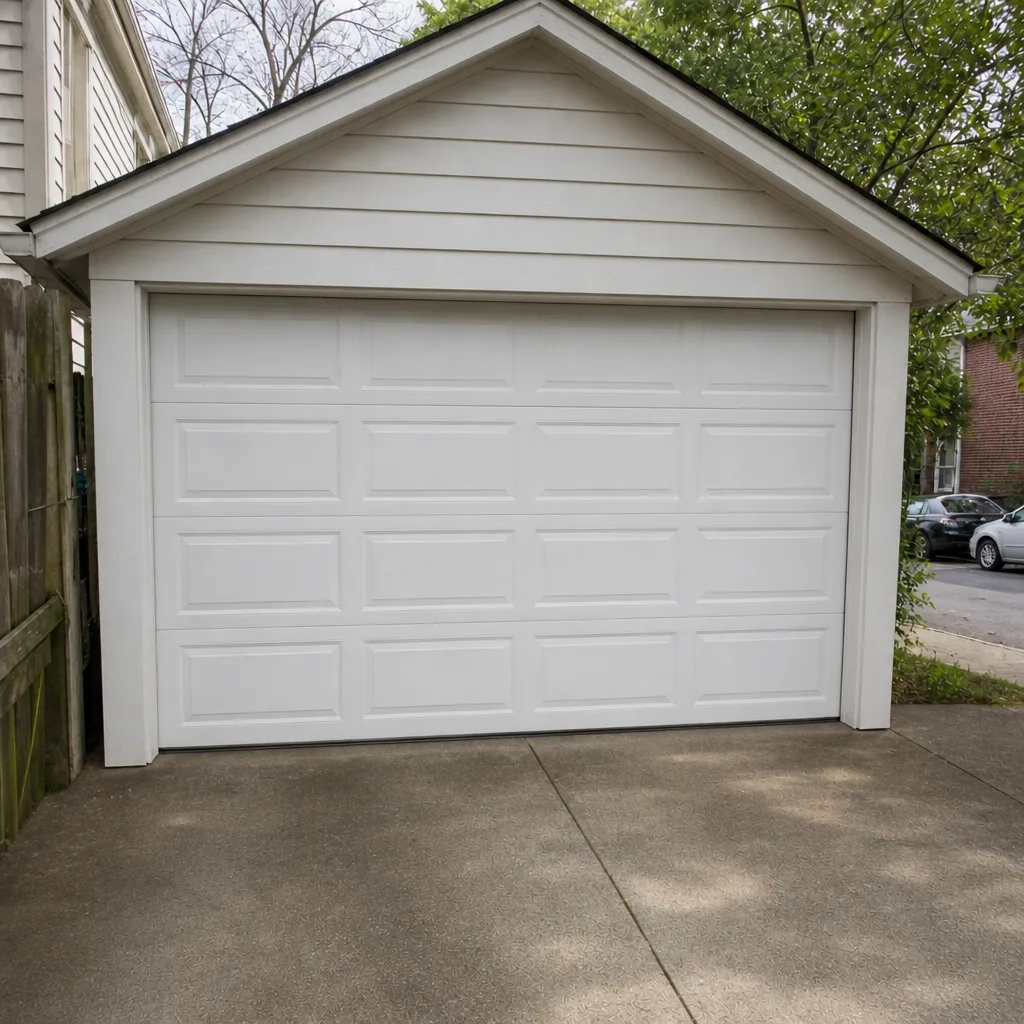 After
When to Call a Professional
Call a professional when the problem touches a spring, a cable, a drum, or the door’s balance, and call immediately when the door is stuck open or jammed shut. Safety sensors that won’t align, an opener that runs but won’t move the door, and any repair on a home older than its hardware has all crossed out of the DIY zone. Don’t wait for a small rattle to become a failure; a door you can still close is a door you can still secure. Our technicians have up to 11 years of experience and are factory-familiar with Wayne Dalton, LiftMaster, and the other major brands – we work on the system you already have rather than a generic substitute. Garage Door Repair Cleveland Park offers free estimates in Cleveland Park, and we’re open Sunday through Friday, 7am to 7pm. Call (833) 918-7067.
Frequently Asked Questions
No, and this isn’t a case of “with the right video you can.” The spring stores the energy that holds up the entire door, and releasing or rewinding it without the proper tools is a genuine injury risk. Call a specialist for spring replacement; it’s the one task on the door where the skill level doesn’t change the outcome of a mistake.
Pull the release cord and try lifting the door by hand. If it’s very heavy or won’t stay up, the spring or the door’s balance is the issue. If it lifts easily and the opener still won’t run, the problem is electrical. Either way, call (833) 918-7067 for an exact quote on diagnosis – estimates are free.
Close it manually if it will move without resistance, disconnect the opener at the release cord, and call us. A door stuck open is a security problem first and a repair second. We treat it as an emergency call, and we’re open Sunday through Friday, 7am to 7pm.
The local professionals we connect you with are licensed and insured as their state requires. Every job is quoted in writing before work starts, and the written quote is the price. Call (833) 918-7067 for a free estimate.
No. We quote the job after looking at the door, put the price in writing, and the written estimate is what you pay. If we find something additional mid-repair, we stop and discuss it with you before proceeding. Call (833) 918-7067 to schedule a look.
It depends entirely on what’s failed – a seal or hinge is a small job, a spring replacement is a larger one, and an opener replacement is a different category of work. We don’t quote over the phone without seeing the door because the range varies so much. Call (833) 918-7067 for a free estimate.
The Bottom Line
The DIY-versus-pro decision on a garage door comes down to stored energy, not confidence. Lubricating, resealing, tightening bolts, and aligning sensors are sensible DIY work that saves money and takes under an hour. Anything touching a spring, a cable, a drum, or the door’s balance belongs with a technician who has the winding bars, the sequence, and the safety training, because the failure mode is injury, not a voided warranty. On older Cleveland Park doors, add the variables: non-standard spring sizes, seized hardware, and header conditions that change mid-job. If you’re unsure which side of the line your repair falls on, call us and we’ll tell you. A free estimate is the cheapest way to find out whether a repair is a weekend project or a job for a specialist.
For garage door repair, opener service, spring work, or a new garage door installation in Cleveland Park, call (833) 918-7067 for a free estimate. We’re open Sunday through Friday, 7am to 7pm, and closed Saturday. One call covers the whole system, and the written quote is the price.
Written by the team at Garage Door Repair Cleveland Park.