Last updated November 21, 2026
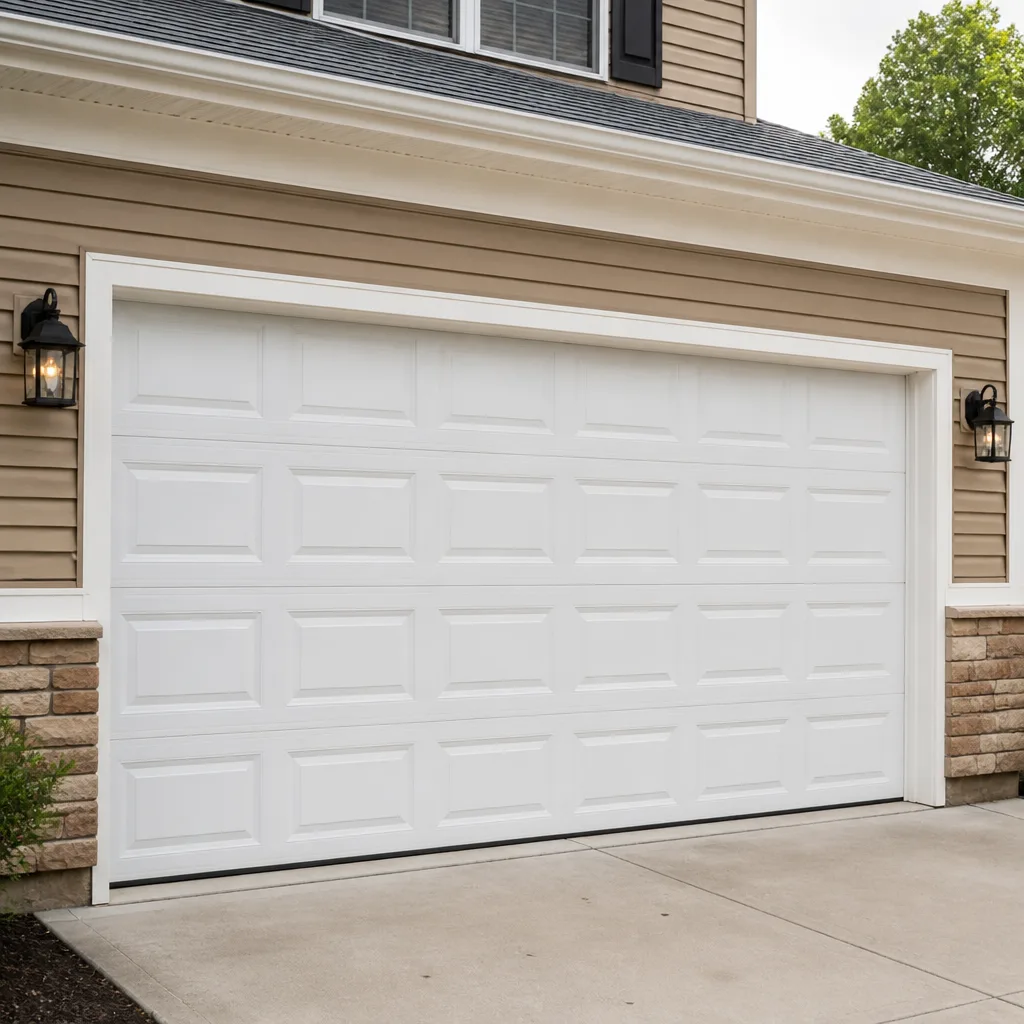 Raised-panel steel
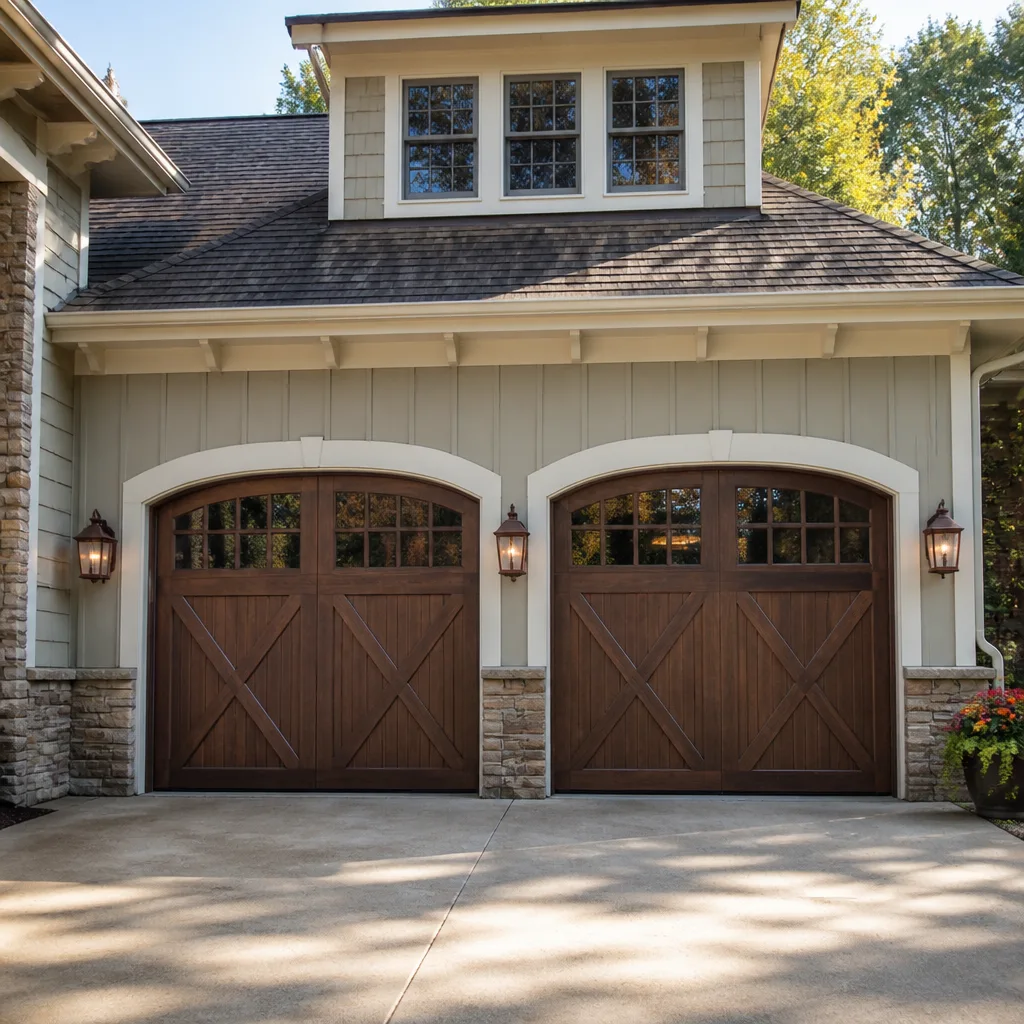 Carriage house
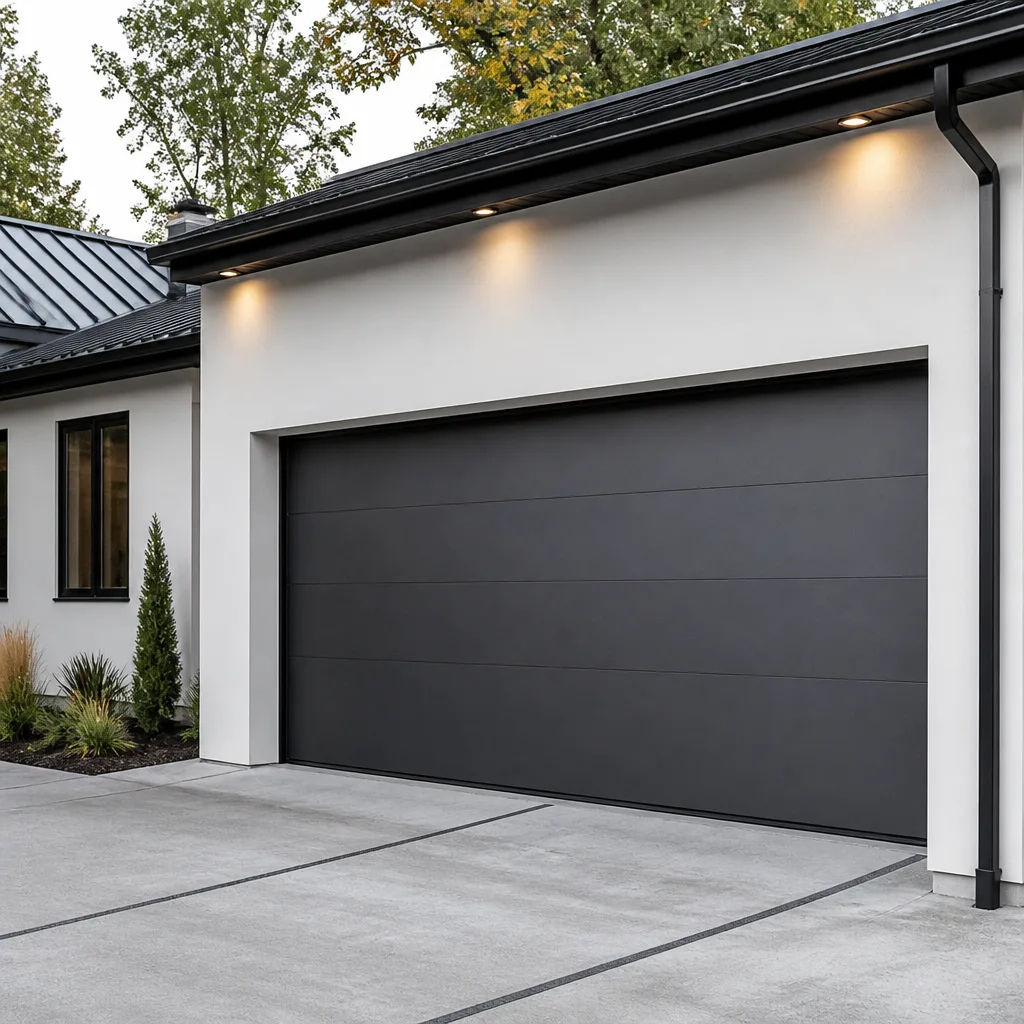 Modern flush
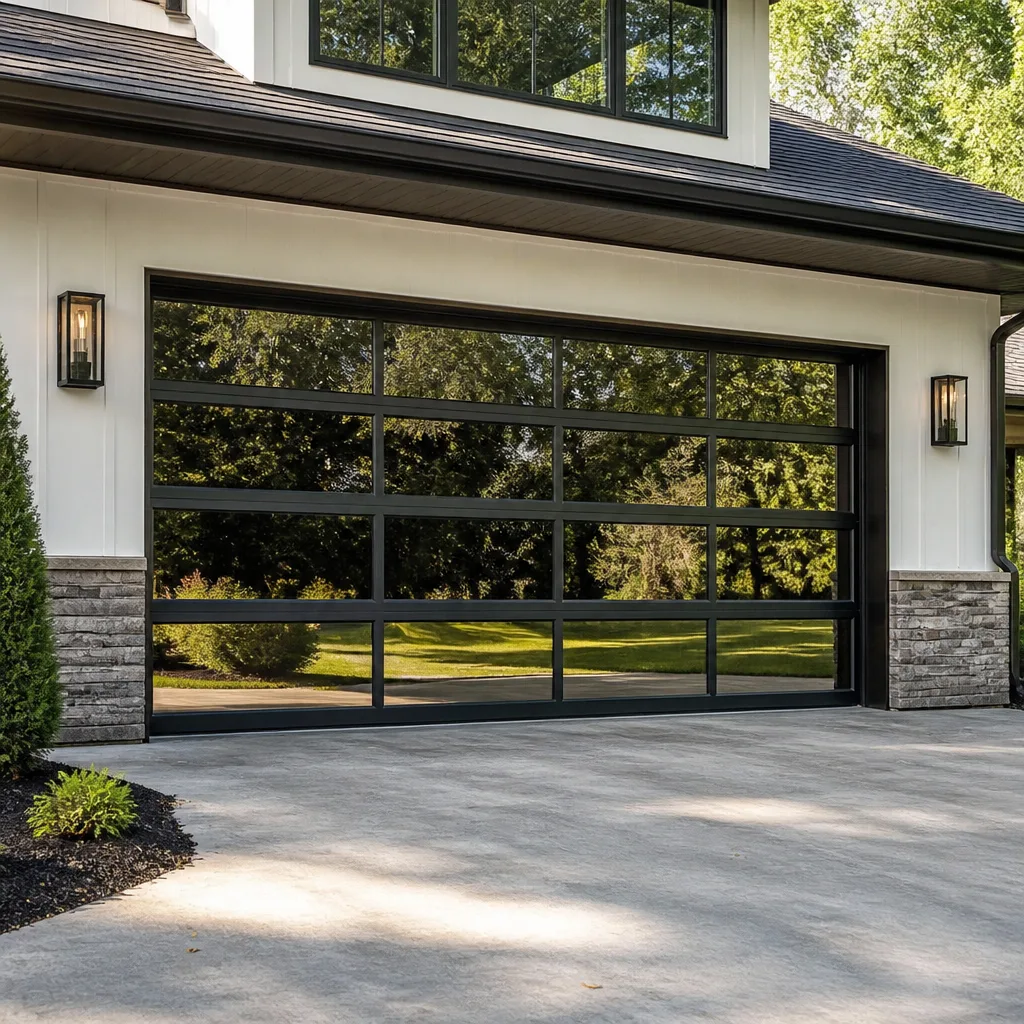 Full-view glass
 LiftMaster openers
 Chamberlain openers
Full 25-point door and opener safety check with every visit - springs, cables, rollers, tracks, and your LiftMaster or Chamberlain opener included
You get a price before we start. It does not change when the pro arrives.
Get your free estimateGarage Door Repair Maintenance Checklist for Cleveland Park Homeowners
Spraying lubricant on torsion spring coils is one of the most common garage door maintenance mistakes we hear about, and it does the opposite of what the homeowner intended. Oil on a wound spring collects grit, traps moisture, and speeds up the metal fatigue that leads to a break. That single example sums up why most published checklists fall short: they list tasks without explaining the mechanical reason behind them, so a well-meaning homeowner can’t tell a helpful chore from a harmful one. This guide draws a hard line between what you can safely do, what’s worth watching, and what belongs to a trained technician. We’ll walk through every task on a real maintenance checklist for a Cleveland Park home, explain the physics, and give you a realistic picture of what annual professional care costs against the repair bill that follows when it’s skipped.
Quick Answer
A safe garage door maintenance checklist for a Cleveland Park home covers four homeowner tasks (visual inspection, weatherstripping check, hardware tightening, and track cleaning), two watch-and-record habits (spring wear monitoring and opener behavior), and several professional-only items (spring adjustment or replacement, cable work, and any repair involving the torsion system). Lubricate rollers, hinges, and the opener rail, but never the torsion spring coils. Professional maintenance typically runs a small annual fee, while deferred repairs can cost several times that.
Styles & brands we work with
- Raised-panel steel
- Carriage house
- Modern flush
- Full-view glass
- LiftMaster openers
- Chamberlain openers
Table of Contents
- Where the Safety Line Falls: Homeowner-Safe vs. Professional-Only
- The Monthly Visual Inspection (Five Minutes, No Tools)
- DC Humidity and Your Lubrication Schedule
- Reading Spring Wear Before It Breaks
- Weatherstripping and Uneven Floors in Older Cleveland Park Garages
- Opener Checks You Can Do Without Opening the Housing
- What Annual Maintenance Costs vs. What Deferred Repairs Cost
- A Seasonal Calendar for Cleveland Park
Where the Safety Line Falls: Homeowner-Safe vs. Professional-Only
Every task in this guide carries one of three labels. Homeowner-safe means you can do it with basic tools and no risk. Professional-recommended means a homeowner can do a version of it, but a technician does it better and catches things you can’t. Professional-only means stop and call someone. The label matters because a garage door is a system under constant tension. Torsion springs store enough energy to move a door that weighs well over a hundred pounds, and that energy doesn’t care who is standing under it.
Here’s how the usual tasks break down by category:
- Homeowner-safe: Visual inspection of springs, cables, and panels; checking and replacing weatherstripping; tightening loose bolts on hinges and brackets (never the spring hardware); cleaning the tracks; testing the safety reverse feature; lubricating rollers, hinges, and the opener rail.
- Professional-recommended: Full lubrication of moving parts with the correct product; balancing check and tension assessment; opener force and travel-limit calibration; roller and hinge replacement as wear shows.
- Professional-only: Any work on torsion or extension springs; anything involving the lift cables; removing or adjusting the bottom bracket; straightening a bent track that carries the door; replacing a snapped spring; resetting a door that has come off its tracks.
The mechanical reason is straightforward. A torsion spring is wound and held under load by set screws on a shaft. Release that load incorrectly and the shaft spins free with enough force to break bones. Cables run at similar tension. A technician has the winding bars, the training, and the knowledge of how much tension the door actually needs for its weight. If you take one thing from this guide, make it this: springs and cables are not DIY territory, no matter what a video suggests. We work on the door and opener as one system, which is exactly why we can tell you where the boundary sits. For anything on the professional-only list, that’s garage door repair work, and it’s worth having it done right.
The Monthly Visual Inspection (Five Minutes, No Tools)
The single most useful habit you can build is a five-minute walk-around of the door once a month. You’re not fixing anything. You’re looking for the early signs of failure so they get handled before they turn into a break. Do this with the door closed, then again with it open, and keep a small notebook or a phone note of anything that changes. A record of what you saw last month is what turns a vague worry into a clear pattern.
Work through this sequence each time:
- Look at the springs above the door. Note the color, the coil spacing, and whether there are any gaps or a visibly stretched section. Write down what you see, even if it looks fine.
- Check the two cables on either side. They should be taut and seated in their drums. Look for fraying, kinks, or strands that have popped.
- Run your eyes down the tracks. They should be straight and free of dents. Look for loose bolts on the brackets that hold them.
- Inspect the panels for cracks, dents, or separation at the seams. A bent panel puts uneven load on everything else.
- Check the weatherstripping along the bottom and sides. We’ll come back to this in detail.
- Test the opener’s safety reverse. Put a small object like a roll of paper towels under the door, close it, and confirm the door reverses on contact. It should, every time.
That’s the whole inspection. No tools, no ladder climbing, no reaching into moving parts. If something on the list looks off, you now have a specific detail to describe when you call. In our experience in Cleveland Park, homeowners who do this monthly walk-around catch most failures while they’re still cheap to fix. Catching a frayed cable before it snaps, or a bent track before it derails the door, is the difference between a small repair and an emergency call. For a door that won’t move at all, that’s an emergency situation, and we treat it as one. When the door won’t move, we move fast, and Garage Door Repair Cleveland Park is the number to call.
DC Humidity and Your Lubrication Schedule
Most national maintenance advice assumes a dry climate. Cleveland Park does not have one. Washington’s summers run humid, and that changes both how often you need to lubricate and what you should put on the moving parts. Humidity does two things to a garage door. It encourages surface rust on bare metal, and it makes the wrong lubricant either evaporate faster or turn into a grit magnet. Both make wear worse, not better.
The parts that need lubrication are the rollers, the hinges, the opener rail, and the torsion shaft bearings. A few points on each, and that’s it. What you should not touch is the torsion spring coils. It’s tempting, because they’re right there and they look like they need it. They don’t. Coiled spring steel is designed to flex dry. A lubricant on the coils traps debris in the gaps between windings and holds moisture against the metal, which is exactly the wrong combination. We’ve seen springs fail early because of a well-intentioned oiling. Leave them alone.
On product choice, a few practical rules for a DC climate:
- Skip thin spray oils. They evaporate within weeks in summer heat and leave the surface dry again before the season ends.
- Skip heavy grease. It holds grit and dust that gets pulled in from a garage floor or driveway, and gritty grease wears parts faster than dry metal.
- Use a proper garage door lubricant, the kind designed to stay put without attracting debris. A light coating on rollers, hinges, and the opener rail is enough.
- Re-lubricate on the humidity side of the calendar, not on a fixed national schedule. Late spring and again in early fall fits Cleveland Park better than a once-a-year habit borrowed from a dry climate.
The reason intervals matter is the cycle the door goes through every day. Each open and close is a load event on every moving part. In a humid summer, a lubricant that’s already evaporated means those load events happen on dry metal. Over a season, that adds up. If you’d rather not think about it, a professional maintenance visit handles the full lubrication correctly and checks the parts that need more than a wipe-down.
Reading Spring Wear Before It Breaks
The hardest part of spring inspection is that a spring can look fine right up until it breaks. But there are specific visual signs that tell you it’s getting close, and a non-mechanic can absolutely learn to read them. The trick is knowing what to look at. You’re checking for three things: gaps in the coils, a stretched section, and color or surface changes. You do this without touching anything, and without tools.
Here’s what each sign means:
- A visible gap in the coils. On a torsion spring, the coils should sit tightly together when the door is closed. A gap means the spring has lost tension or has started to unwind. That’s a strong signal it’s near the end of its life.
- A stretched section. If one part of the spring looks pulled out compared to the rest, the metal has been stressed beyond its working range.
- Surface changes. Heavy rust, pitting, or a dullness that’s new since last month can indicate the spring is working harder than it should.
- Color. Springs are painted a specific color to denote their tension rating. If the paint is gone or the color has changed, note it. A replacement has to match the original rating, and the technician will need to know what it was.
- Noise. A loud bang from the garage with no other explanation is the classic sign of a spring breaking. If you hear it, don’t try to operate the door.
If you see any of those signs, stop operating the door regularly and book a professional assessment. A broken torsion spring on a two-car door means the door is being held up by nothing but the opener and the cables, which is not a safe situation. Spring repair on two springs usually means replacing both, because they’ve lived identical lives and the second one is on borrowed time. For a door that has already failed, the call to make is garage door opener repair or spring service, whichever the symptom points to. Our technicians have up to 11 years of experience with torsion and extension spring work, and that’s the kind of job we don’t recommend anyone tries at home. A single spring replacement typically runs $180 to $340, and a matched pair usually goes for about twice that because both are replaced together.
Weatherstripping and Uneven Floors in Older Cleveland Park Garages
Cleveland Park has a lot of older homes, and older garages often come with an uneven concrete floor and masonry walls that are anything but square. That makes weatherstripping one of the more important things to check, and one of the trickiest to get right. A seal that’s perfect on a new build can fail here because the door doesn’t meet the floor evenly across its width. Your inspection needs to account for that gap.
Here’s how to check the seal properly:
- Close the door fully and look along the bottom edge from the inside. You’re looking for daylight or a visible gap.
- Slide a piece of paper or a thin strip of cardboard under the door at several points, including the corners. If it slides through easily anywhere, that spot is leaking.
- Check the sides and top with the same method. Corner gaps are the most common.
- Inspect the rubber or vinyl itself for cracks, brittleness, or sections that have pulled loose from the retainer.
- After a heavy rain, look for water tracks on the floor inside the door. That tells you exactly where the seal is failing.
If you find a gap, the fix depends on the cause. Sometimes it’s as simple as replacing the bottom seal, which is a homeowner-safe job. Sometimes the uneven floor means the door needs a slight adjustment to meet it better, which is a professional task. And sometimes the door itself has warped, which needs a technician to assess. For a garage door that’s going to be adjusted or repaired, we’d rather see it once and get it right than have you buy three different seals trying to solve a problem that isn’t the seal. On the DC humidity question, a good seal also keeps moisture out of the garage, which protects every metal part inside. If your door is beyond a seal fix and needs a new panel or a full replacement, that’s garage door installation territory, and the measure-and-quote process starts with a free estimate.
Opener Checks You Can Do Without Opening the Housing
Your opener is doing a lot of quiet work you never see, and most of what goes wrong shows up as a change in behavior rather than a dramatic failure. You can check almost everything useful about an opener without removing its cover, and you should, because a failing opener is a safety issue and a convenience issue at the same time. We work with most of the major brands, including Clopay, Amarr, and Wayne Dalton doors and the openers that pair with them, so we know where the weak points tend to sit.
Run these checks each month:
- Safety reverse. The paper-towel roll test. The door must reverse on contact with an object every time. This is the most important single check on the whole list.
- Photo-eye alignment. The two sensors at the bottom of the tracks should have steady lights. If either is blinking, the beam is interrupted or misaligned, and the door won’t close properly.
- Balance. With the door closed, pull the manual release to disconnect the opener, then lift the door halfway by hand. It should stay put with light effort. If it wants to fall or is hard to lift, the springs need attention and the opener is working too hard.
- Speed and smoothness. Listen and watch. A door that jerks, slows partway, or reverses for no reason is telling you something.
- Force settings. If the door reverses when it meets an obstacle below the point it used to, the force setting may be too low. This is a calibration a technician can adjust quickly.
Please don’t open the opener housing to look inside. The capacitor holds a charge, and the mechanisms are small enough that a slipped tool causes real damage. This is exactly the kind of thing the boundary in this guide is for. If the opener behaves oddly, the professional-recommended step is a proper diagnostic. For a door that won’t open at all, that’s an emergency situation and a same-day call. When the door won’t move, we move fast, and the first job is figuring out whether the problem is mechanical or electrical. The opener, the springs, and the door are one system, so we handle them as one, and you don’t get bounced between contractors. That’s a real advantage in Cleveland Park, where the door and opener often age together.
What Annual Maintenance Costs vs. What Deferred Repairs Cost
Here’s the honest math. A professional maintenance visit covers the full lubrication, a balance and tension assessment, opener force and travel calibration, and a close inspection of the springs, cables, and tracks. It catches the small stuff early. What it costs depends on your door and what needs doing, but think of it as a modest annual expense that stays in the same range as a standard repair. Compare that to the alternative, where a neglected door fails in a way that costs several times more.
Typical Cleveland Park ranges, as estimates only:
| Service | Typical estimated range |
|---|---|
| Professional maintenance visit (lubrication, calibration, full inspection) | A modest annual cost, quoted by estimate per door |
| Single torsion spring replacement | $180 to $340 |
| Matched pair of torsion springs (both replaced together) | About twice the single-spring range |
| Roller and hinge replacement | Quoted by estimate based on the number of parts |
| Opener repair or board replacement | Quoted by estimate after diagnosis |
| Emergency response for a jammed or stuck door | A separate call-out is typically included in the estimate |
The mechanics of deferred maintenance are what make the case. A dry spring under load flexes unevenly and works harder, which is the acceleration path to a break. Gritty rollers make the opener pull harder on the whole system. A failing weatherstripping lets humidity into the garage in a DC summer and rusts parts inside. None of those failures show up as a single bill at once. They show up over time as small things that stop working, and each one pushes the others. A broken spring and the emergency call, the opener that overworked to compensate, and the panel that got stressed in the process add up to a repair that dwarfs what maintenance would have cost. Spring and cable work is the part that requires a technician, and the spring work alone is a healthy chunk of the annual total. The written estimate is what sets the final price, and it’s always quoted and agreed before any work starts. We don’t hand you a bill bigger than the quote.
A Seasonal Calendar for Cleveland Park
A maintenance calendar for this climate isn’t the four-season one national advice lists. It’s built around Washington’s humidity swings and the way they hit metal. Here’s the schedule that works for a Cleveland Park home.
- Early spring: Post-winter inspection. Look for rust after a wet winter, check the weatherstripping after months of rain, and lubricate the moving parts ahead of the humid season. This is the ideal time for a professional maintenance visit.
- Late spring, before the summer humidity: Re-check the lubrication and the seal. In our experience this is the point where a product that won’t hold up in humidity starts to fail.
- Mid-summer: Focus on the garage’s ventilation and moisture. Look for condensation inside and re-check the weatherstripping. Watch the springs and cables carefully, since humid summers are the hardest season on metal flex parts.
- Early fall: Full inspection before the cold. Confirm the door is balanced, since a door that was balanced in summer can feel different as temperatures drop. Re-lubricate.
- Winter: Watch the bottom seal for cracking and the tracks for any ice or grit. Keep the photo-eyes clear. A door that starts the day stuck is a real problem in cold weather, and we treat it as an emergency call.
The logic behind this schedule is the cycle the door goes through daily. Each open and close is a load event on the springs and cables. In Cleveland Park, those events happen in a humid summer and a cold winter on either side of milder spring and fall. Matching your checks to the season means you’re looking at each part when it’s most likely to fail, not once a year on a calendar you found online. The seasonal schedule is what a professional maintenance relationship gives you, and it’s the pattern we recommend for homes in this part of DC.
Common Mistakes to Avoid
- Lubricating the torsion spring coils. The opening point of this whole guide. Oil on coiled spring steel traps grit and holds moisture against the metal, which accelerates fatigue. Spray the rollers, hinges, and opener rail only.
- Using the wrong product for a DC climate. Thin spray oils evaporate in weeks during a Washington summer, and heavy grease turns into a grit magnet. A proper garage door lubricant lasts longer and protects the parts.
- Trying to adjust or remove a torsion spring yourself. This is the most dangerous part of the whole system. The energy stored in a wound spring can cause serious injury, and the settling behavior of the door depends on the exact tension. It’s professional-only, full stop.
- Ignoring an uneven garage floor when checking the seal. Cleveland Park has older garages, and a seal that works on flat concrete may leak at the corners here. Test the gap with paper, and look for water marks after rain rather than trusting a visual once-over.
- Letting a frayed cable run. A cable that looks a little worn today can snap under load tomorrow. It’s a professional repair, but the visual check that catches it is homeowner-safe and takes seconds.
- Assuming the opener is the problem. A door that won’t open is often a spring, cable, or track problem that’s making the opener strain. Throwing a new opener at a door issue just hides the real fault and risks the new unit.
- Skipping the monthly visual because nothing seems wrong. The value of the check is the record. Regular notes on the springs and seal are what let you spot a change, and in this climate the changes come fast enough that a once-a-year look isn’t enough.
See the difference
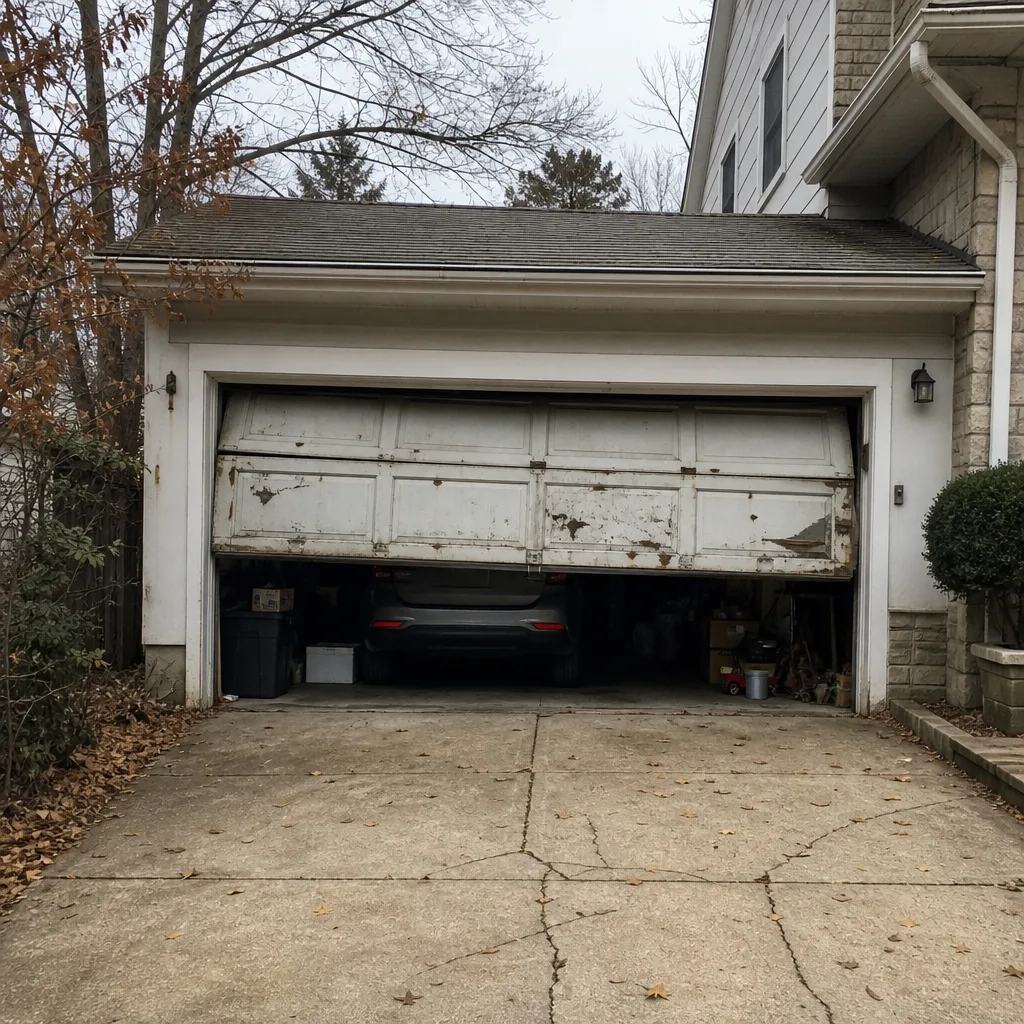 Before
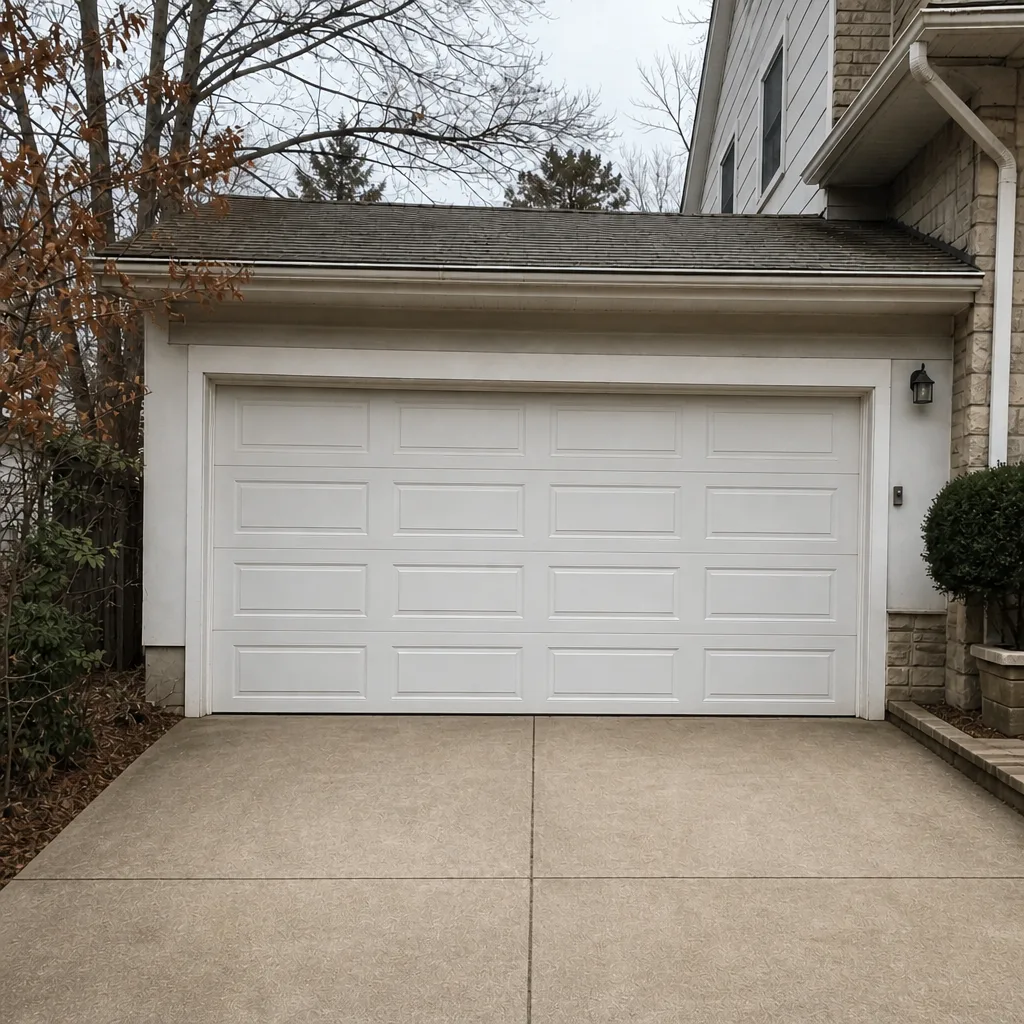 After
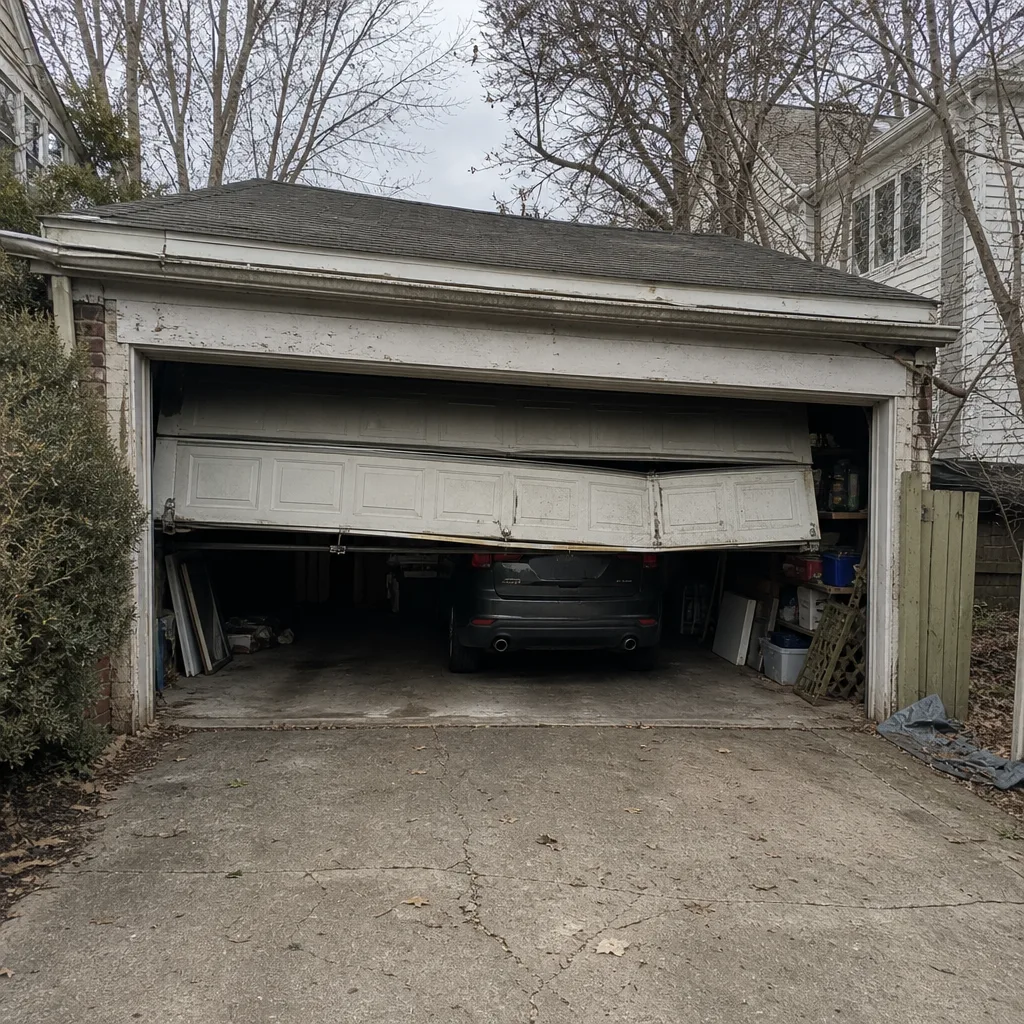 Before
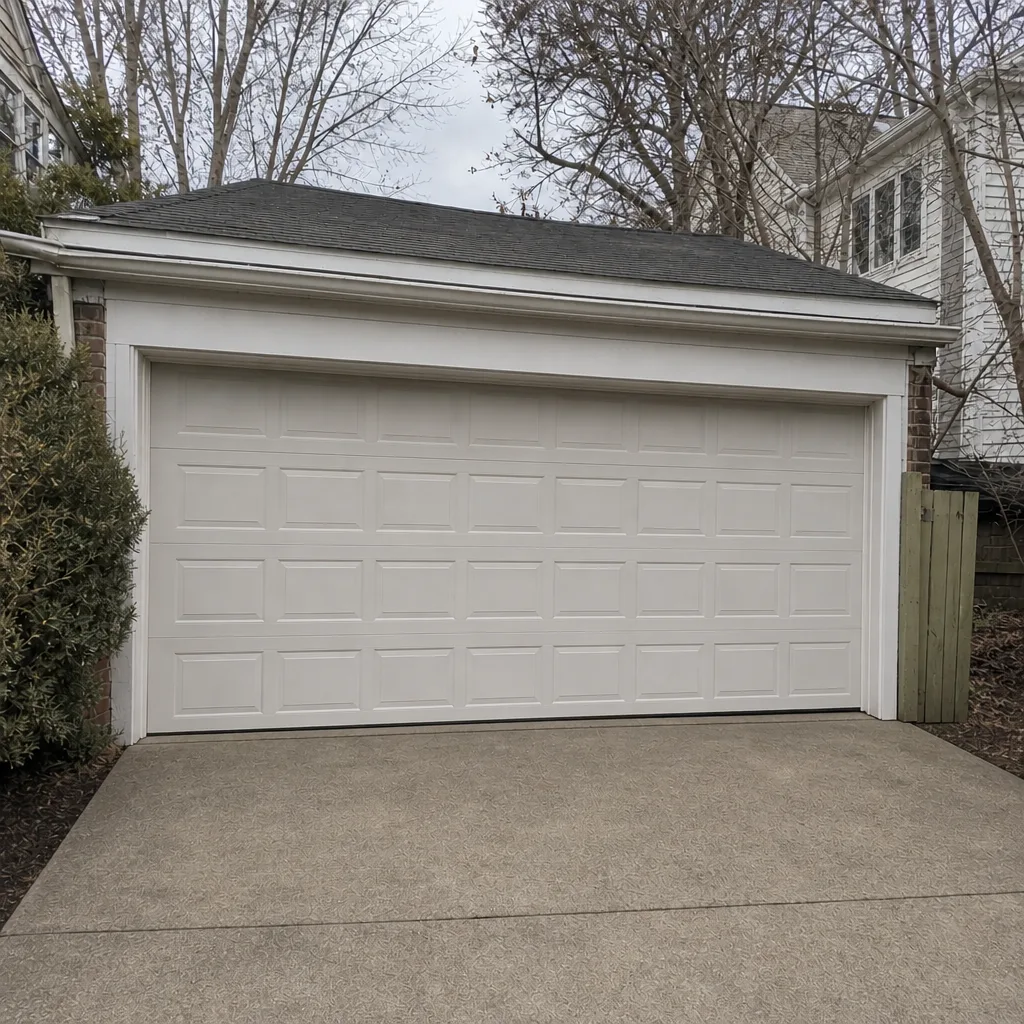 After
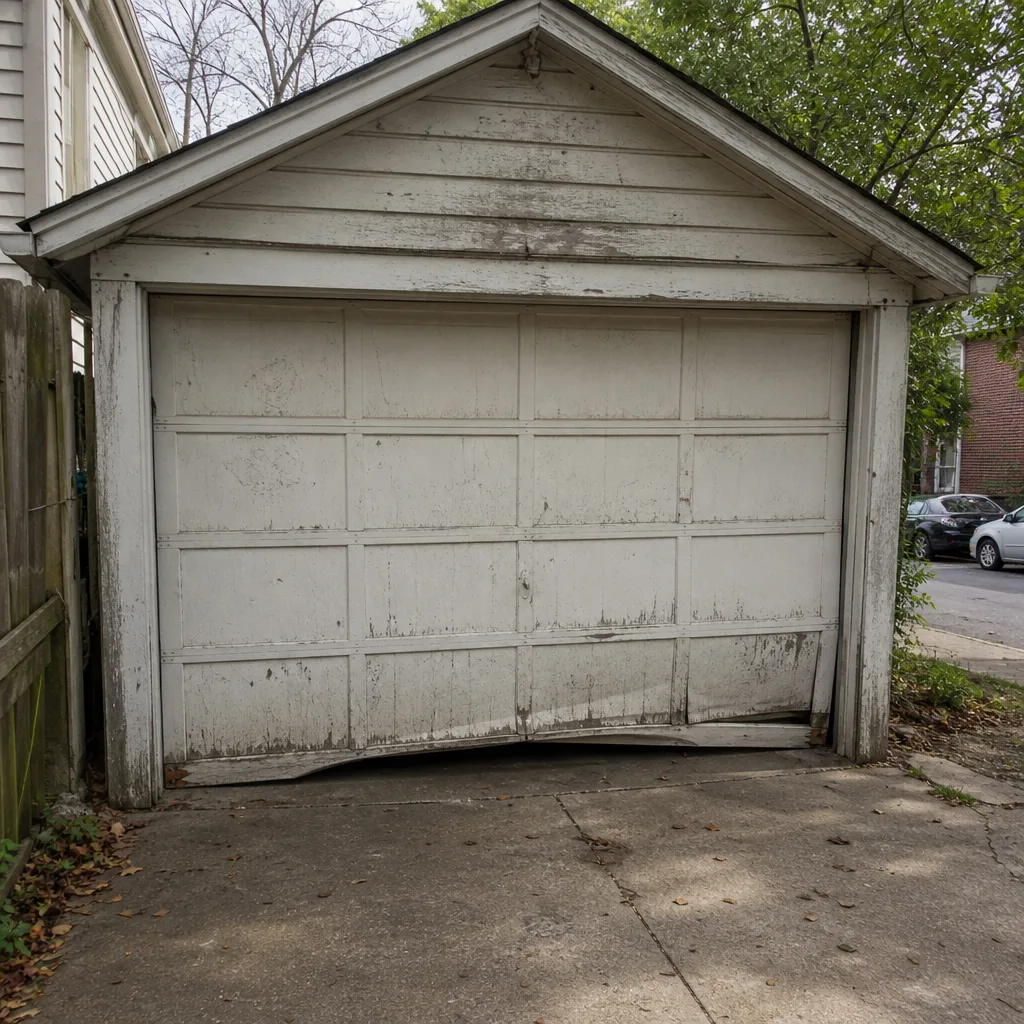 Before
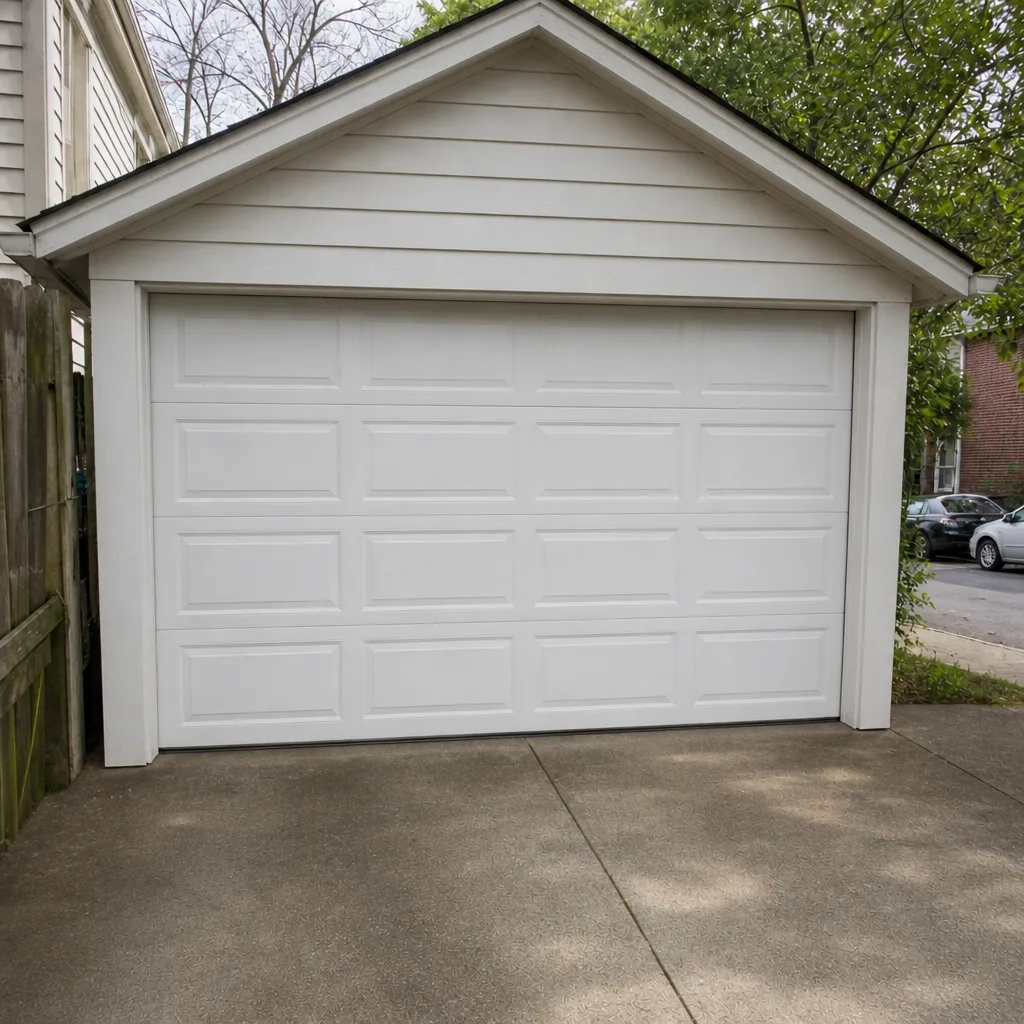 After
When to Call a Professional
Call a professional if you find a gap in the torsion spring coils, a frayed or kinked cable, a track that has been hit or gone out of alignment, a door that has come off its tracks, or a panel that’s bent enough to load the rest of the system. Call if the opener reverses for no reason, if the manual release won’t disengage, or if you hear a loud bang with no obvious cause. And call if the door won’t move at all, because a stuck door is a security issue as much as a convenience one. Garage Door Repair Cleveland Park offers free estimates in Cleveland Park, and we can tell you whether the problem is mechanical or electrical before we quote a fix. Call (833) 918-7067 with the details from your monthly check, and you’ll get a clear answer. The price is always quoted and agreed before anything starts.
Frequently Asked Questions
A basic checklist covers four homeowner-safe tasks and two watch-and-record habits. The safe tasks are a monthly visual inspection of springs, cables, and panels, checking and replacing weatherstripping, tightening loose hinge and bracket bolts, and cleaning the tracks. The watch-and-record habits are spring wear monitoring and opener behavior. Professional-only items are anything involving springs, cables, or the bottom bracket. Call (833) 918-7067 for a free maintenance estimate.
No. Do not lubricate torsion spring coils. Coiled spring steel is designed to flex dry, and lubricant on the coils traps grit in the gaps between windings and holds moisture against the metal, which accelerates fatigue and can cause the spring to fail early. Lubricate the rollers, hinges, and opener rail instead. For spring inspection or replacement, call (833) 918-7067 for a free estimate.
Check the door visually once a month and lubricate on the humidity side of the calendar, in late spring and again in early fall. Washington’s summers run humid, and that’s when thin spray lubricants evaporate fastest and bare metal rusts. A professional maintenance visit once a year catches what you can’t see, and it should come in early spring so the door is ready before the humid season. Call (833) 918-7067 for an exact quote.
Look for a visible gap in the torsion coils when the door is closed, a stretched section compared to the rest of the spring, heavy rust or pitting that’s new, and a color change that doesn’t match the spring’s original rating. A loud bang from the garage is the classic sign of a break. If you see any of those, stop operating the door and call for an assessment. A single spring typically runs $180 to $340, and a matched pair usually costs about twice that because both are replaced together. Call (833) 918-7067 for an exact quote.
Treat a jammed door as an emergency and don’t force it. A door that’s off its tracks or stuck open is under tension from the springs and cables, and forcing it can cause injury or damage the panels. The safe move is to leave it and call. For a jammed door, call (833) 918-7067 and we’ll get it moving.
No. The price in your written estimate is the price, and it’s quoted and agreed before any work starts. Diagnostics are how we know what’s actually wrong, and the estimate reflects that, so the invoice matches the quote. Free estimates make it easy to know what you’re facing before you commit. Call (833) 918-7067 for an exact quote.
The Bottom Line
The value of a maintenance checklist is in its honesty about what you can safely do. Four tasks a month, a couple of watch habits, and a clear understanding that springs and cables belong to a trained technician. Lubricate the rollers, hinges, and opener rail, never the torsion coils. In Cleveland Park’s humid summers, re-lubricate on the humidity side of the year, and read your springs for gaps and stretching before they break. The annual cost of professional care is modest compared to the repair bill that deferred maintenance produces, and the written estimate sets the final price. Our technicians have up to 11 years of experience, and we work with your brand, whether it’s a Clopay, Amarr, Wayne Dalton, or the opener already on your ceiling.
Garage Door Repair Cleveland Park handles the whole system, from springs and cables to openers and installation, so you don’t have to coordinate contractors when a problem crosses categories. Emergency service is available when the door won’t move. For a maintenance visit, a repair, or a free estimate, call (833) 918-7067 today and we’ll take it from there.
Written by the team at Garage Door Repair Cleveland Park.