Last updated November 21, 2026
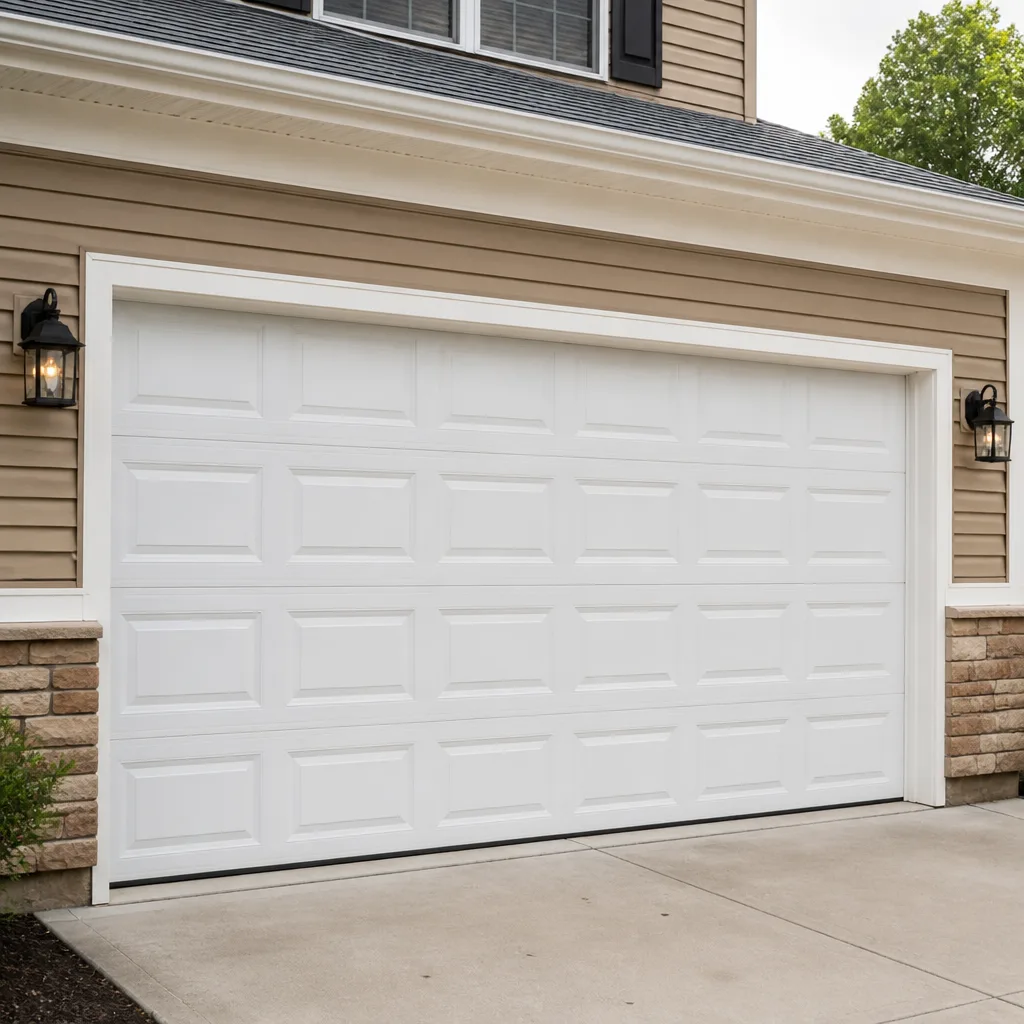 Raised-panel steel
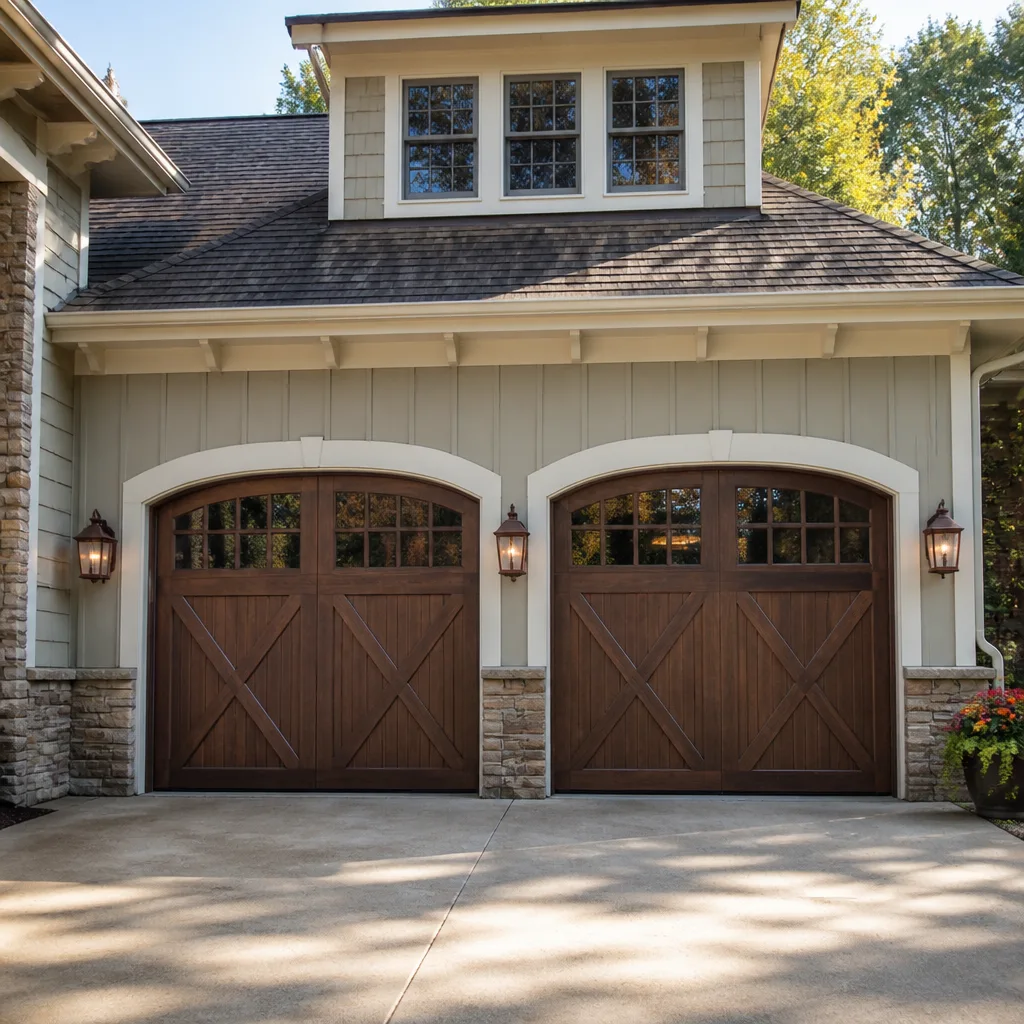 Carriage house
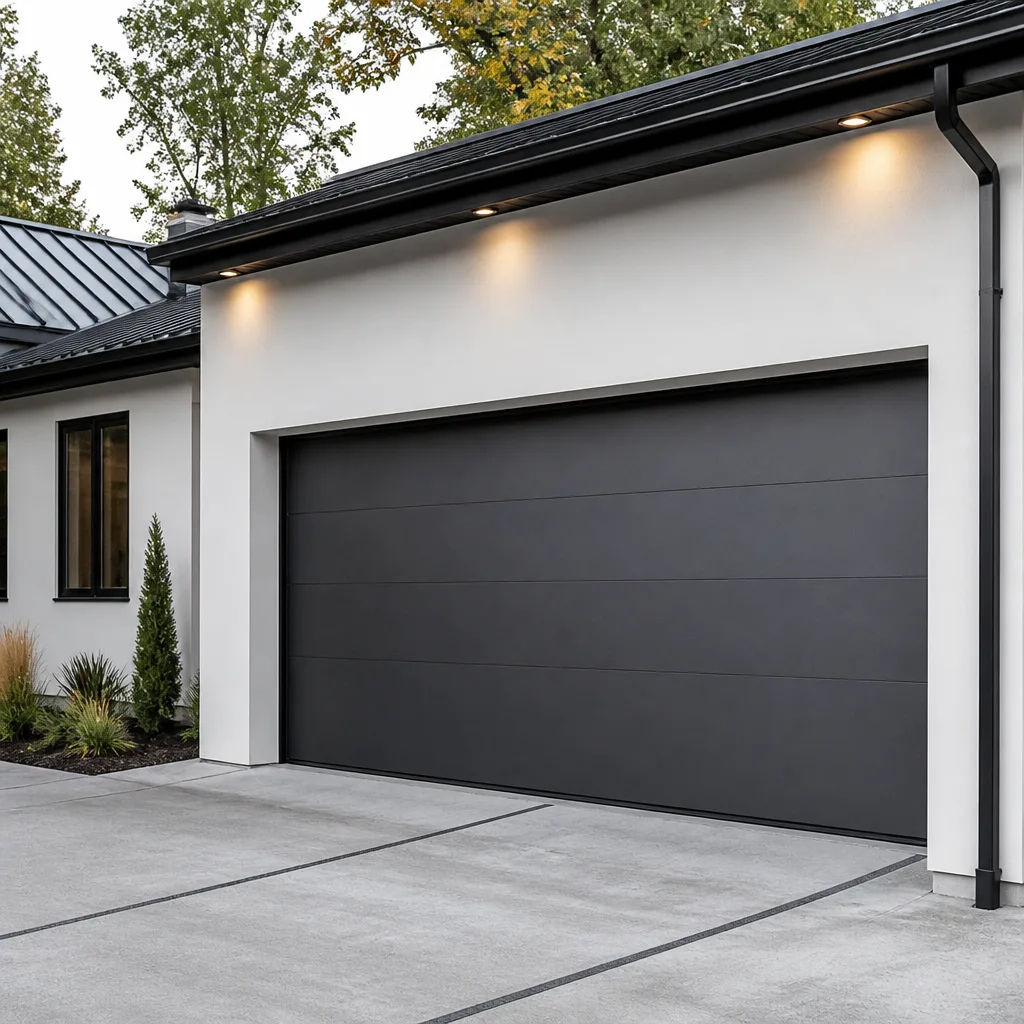 Modern flush
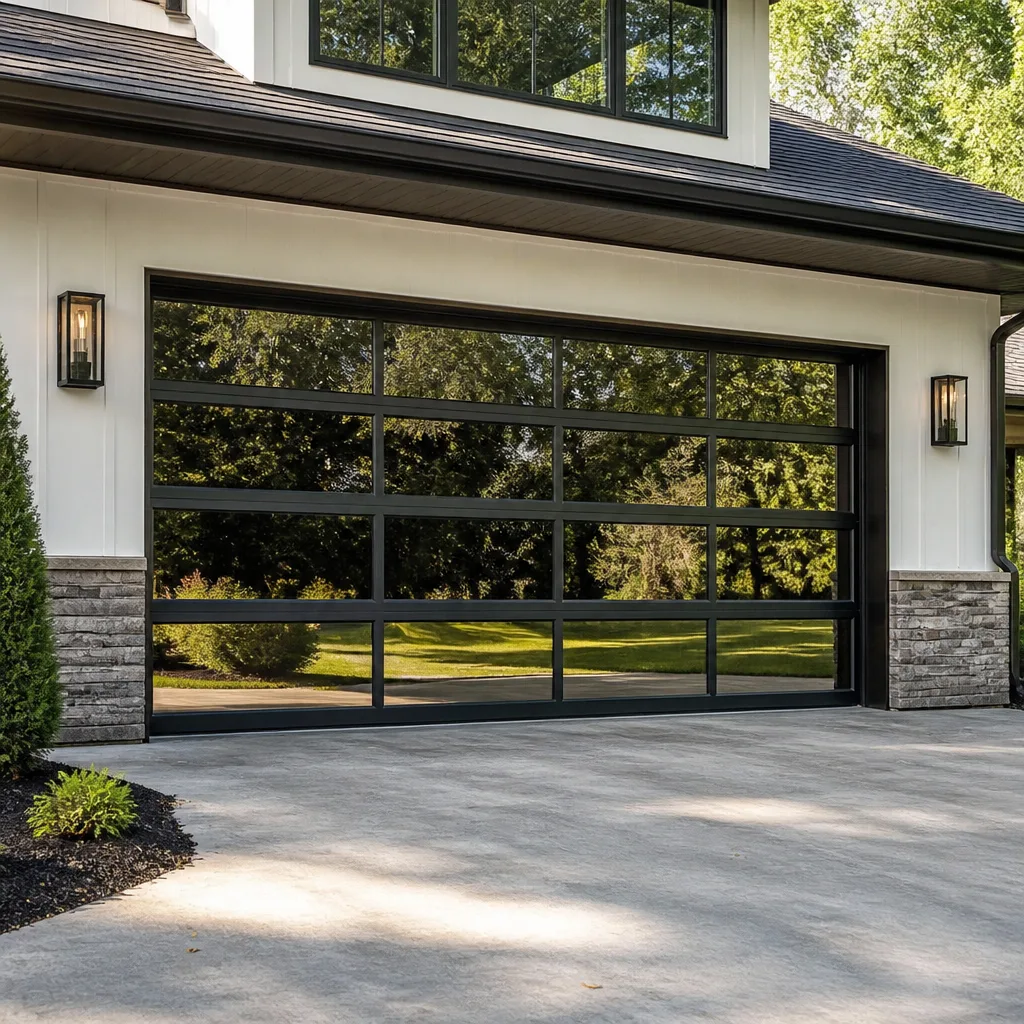 Full-view glass
 LiftMaster openers
 Chamberlain openers
Full 25-point door and opener safety check with every visit - springs, cables, rollers, tracks, and your LiftMaster or Chamberlain opener included
You get a price before we start. It does not change when the pro arrives.
Get your free estimateGarage Door Warning Signs: A Cleveland Park Homeowner’s Reference Guide
A door that reverses before it fully closes is not a sensor problem most of the time. It’s usually a spring tension issue, and the sensor gets blamed because it’s the one component most homeowners can actually see. That gap between the symptom you notice and the part that’s actually failing is where most garage door confusion starts. This guide closes that gap. We map each warning sign to the component behind it, tell you how much time you likely have, and show you how the older detached garages around Cleveland Park fail differently from attached suburban builds. By the end you’ll know what to stop using immediately, what to schedule, and what can wait.
Quick Answer
The most urgent garage door warning signs are a snapped torsion spring (the door won’t lift by hand), a frayed or kinked cable, a door that slams shut instead of lowering smoothly, and any door hanging visibly crooked in its frame. Those mean stop using the door today. Grinding, squealing, slow openers, and a single worn roller are usually watch-and-schedule issues. In Cleveland Park, older detached garages add a third category: settling foundations and flexing headers that produce misalignment warnings slowly rather than suddenly.
Styles & brands we work with
- Raised-panel steel
- Carriage house
- Modern flush
- Full-view glass
- LiftMaster openers
- Chamberlain openers
Table of Contents
- Symptom-to-Component Diagnostic Index
- The Sounds Index: Grinding, Popping, Squealing, Banging
- Urgent Failures vs. Watch-and-Schedule Issues
- Why Cleveland Park Garages Show Different Warning Patterns
- The Decision Framework: Stop, Book in 48 Hours, or Wait
- What Not to Touch, and Why
- The Warning Signs You Can Catch Early
Symptom-to-Component Diagnostic Index
Here is the core of this guide. For every warning sign you can observe from the driveway, we identify the component most likely responsible and the second and third suspects when the first doesn’t fit. You don’t need to diagnose the door yourself. You just need enough signal to know whether this is a call-now problem or a schedule-it problem.
- Door reverses before closing: Most likely a spring that has lost tension, not the safety sensor. Second suspect: a misaligned photo-eye. Third: a limit setting on the opener.
- Door is heavy to lift by hand: Almost always a broken or weakened spring. This is the clearest spring signal there is, and it’s the one test a homeowner can do safely with the door disconnected.
- Door hangs crooked: A snapped spring on one side, or a stretched cable on the opposite side.
- Grinding during travel: Worn nylon rollers or dry hinges. If the noise comes from the opener head itself, suspect the gear or sprocket inside the unit.
- Squealing on open or close: Metal-on-metal contact, usually dry torsion springs or a roller seizing in its bracket.
- Loud bang with no movement: A torsion spring has broken. Do not run the opener.
- Door opens part way and stops: A travel limit out of adjustment, a failing opener gear, or a binding track.
- Opener runs but door doesn’t move: A stripped opener gear, or a broken spring that has fully released tension.
- Cable hanging loose or kinked: A cable has slipped off a drum or frayed. This is a stop-use sign.
When a warning sign points to the door and the opener both, that split diagnosis is exactly where homeowners get bounced between two contractors. We cover doors and openers as one relationship, so the answer isn’t “call the other guy.” For the mechanical side, our garage door repair work covers the door, and our garage door opener repair work covers the motor, gear, and control board side. Same company, same visit.
The Sounds Index: Grinding, Popping, Squealing, Banging
Sound is the earliest warning sign a garage door gives you, and it’s the one most homeowners hear without registering. Here’s how to translate what you’re hearing into a hardware suspect.
Grinding
Grinding is friction, and the usual culprit is a roller that has worn flat or a hinge pin that’s dried out. On older doors, the rollers sit in steel brackets that collect grit over years, and the contact produces a low, continuous grind as the door travels. If the grind is high-pitched and comes from the opener head itself, the gear inside the opener is wearing out. Both are schedule-it issues. Neither means stop using the door today.
Popping
A single pop when the door reaches a certain height is usually a torsion spring that’s binding slightly as it winds, or a cable that’s jumped its drum. Repeated popping at the same point on the track is different – it often means a hinge is worn or a panel joint is flexing. Popping that comes with the door visibly jumping is a stop-use sign.
Squealing
Squealing is metal against metal with nothing between them. Dry torsion springs are the most common source, and a squealing spring has usually been dry for months before it fails. Rollers that seize in their brackets also squeal as the door forces them along the track. Lubrication helps in the short term, but a squealing spring should be inspected by someone who knows springs, because a spring that’s been running dry is closer to snapping than one that hasn’t.
Banging
A single loud bang with no door movement at all is the classic torsion spring failure. The bang is the spring releasing its stored tension all at once. If you hear that bang and the door won’t lift, the spring has broken and the door is dead until it’s replaced. The door can weigh several hundred pounds on its own once the spring fails, so running the opener risks burning out the motor.
If you don’t yet know the brand on your door or your opener, look for the badge on the opener head and the panel stamp on the door. We work on whatever system is already installed, from Amarr and Wayne Dalton doors to Craftsman and Raynor openers. Brand-specific diagnostics matter because the travel limits, gear assemblies, and spring specs are not interchangeable across manufacturers.
Urgent Failures vs. Watch-and-Schedule Issues
The hardest part of a warning sign is deciding how much time you have. Here’s the split we use, based on what a homeowner can actually observe without tools.
Stop using the door today
- A broken torsion spring. The door won’t lift by hand once disconnected, or you heard the bang and it won’t move at all.
- A frayed or kinked cable. Cables are under tension. A frayed cable can snap and flail, and a stressed cable is a genuine hazard.
- A door that hangs visibly crooked. That means the two sides are no longer balanced, and continuing to run it stresses both the track and the panels.
- A door that slams shut instead of lowering smoothly. The spring isn’t controlling the descent, which puts sudden weight on the whole system.
- A bent or separated track. A door that has partially left its track can come down unevenly and, in the worst case, come off entirely.
Book within 48 hours
- A reversing door. Reverse-before-close is a spring tension issue most of the time, and a door that reverses unexpectedly is unpredictable on the way down.
- A door that opens part way and stops. The travel limit is drifting, or the opener gear is failing. Either way it gets worse before it gets better.
- Grinding or squealing that has gotten louder over a week. Early friction is a schedule issue. Escalating friction is on its way to a seize-up.
Add to the next maintenance visit
- A single worn roller. Cosmetic for now. Replace it before it seizes.
- A slow opener. Motor age, not an emergency.
- A small gap at the bottom seal. Weatherstrip wears with sun and time.
- A faint squeak on one hinge. Lubrication fixes it.
If your symptom is in the first list, call us and we’ll book emergency service. A door stuck open on a city street is a security problem and a safety one, and we treat it as such.
Why Cleveland Park Garages Show Different Warning Patterns
Cleveland Park is one of the oldest neighborhoods in the city, and a lot of the housing stock is detached or semi-detached with a garage out back on an alley. That architecture produces warning signs you don’t see the same way in attached suburban builds, and the diagnosis changes accordingly.
Header flex
The garage door opening is a wide span. On an old detached garage, the header above the opening carries the weight of the structure above it, and over decades it can flex. A header that gives slightly shifts the track alignment, and the door starts dragging on one side. That registers to the homeowner as a grinding sound or a door that hangs a little off-center. It’s not always the roller. On older garages, header flex is a real suspect, and no amount of roller replacement will fix a track that has gone out of plane because the structure has moved.
Foundation settling
Older foundations settle, sometimes unevenly. When they do, the garage slab moves, the jambs shift, and the door’s vertical travel goes slightly out of square. The result is a door that runs fine for six months and then starts catching on the same spot every time. In newer builds, this is rare. In Cleveland Park’s older detached garages, it’s a pattern we plan for on every service call.
What this means for warning signs
A squealing spring in a newer build is almost always just a dried spring. A door that hangs crooked in an older Cleveland Park garage could be a spring, a cable, or a structural shift that has thrown the track out of line. Those are three different fixes, and the wrong one wastes your money. This is the main reason the neighborhood’s older garages need a diagnosis on-site rather than a guess over the phone. If your door has started catching at the same point or hanging crooked, we can look at the whole geometry and the hardware together – a Garage Door Repair Cleveland Park visit covers both.
The Decision Framework: Stop, Book in 48 Hours, or Wait
There’s no single rule that covers every door, but there is a sequence of questions you can run through in about two minutes. Here it is.
- Is the door safe to walk under? If it hangs crooked or won’t stay up on its own, don’t go under it. If it can come down while your car or your family is in the way, stop here and call.
- Disconnect the opener and lift the door by hand. Every opener has a red emergency release. Pull it, then try to lift the door about a foot and let go. A door that feels heavy or won’t stay up has lost spring tension. That’s a stop-use result.
- Look at the cables. Run your eyes along both sides of the door. Frayed strands, kinks, or a cable that’s slipped off its drum means stop-use.
- Look at the springs. Torsion springs run along a shaft above the door. Extension springs run along the sides. A visible gap in a torsion spring, or a stretched extension spring, is failure.
- Listen while the door runs, then stop the door and listen again. If you’ve passed the first four checks, sound tells the rest. Escalating noise means book within 48 hours. Stable, mild noise means add it to your next visit.
- Look at the track and the panels. A visible kink in the track, or a panel that has separated from its neighbors, means stop-use.
If you’ve run through these and you’re still not sure, that’s a fine place to call. We’d rather look at a door that turns out to be fine than have you run one that isn’t.
What Not to Touch, and Why
Torsion and extension springs store enough energy to lift a several-hundred-pound door, and that energy doesn’t go away when the door is down. The winding bars that hold a spring under tension are the exact tools that injure homeowners who try to adjust or replace a spring themselves. Cables are similarly under tension and can snap with serious force. We don’t walk readers through spring or cable work for that reason. Spring repair is a job for someone who has the training and the tools, and it’s one of the most dangerous jobs in the trade.
The same goes for opener repairs that involve the door’s weight. If the spring is broken, running the opener damages the motor, the gear, and sometimes the door panels. A trained technician will check the spring tension, the balance, and the opener as one system. Our technicians have up to 11 years of experience, and spring work is the part of the job that demands the most of it. If you’re not sure whether your door has a spring issue, don’t test it under load – pull the release, lift by hand, and call us if the door is heavy or won’t stay up.
The Warning Signs You Can Catch Early
The best warning sign is the one that shows up before the failure. These are the checks you can do once a month, safely, without tools.
- Watch the door travel. A door that runs cleanly one month and starts to hesitate the next is warning you about a spring, a limit, or a roller. Note when the hesitation starts.
- Listen for new sounds. Any sound that wasn’t there last month is worth noting. A grinding roller and a grinding opener gear sound different, and the difference matters.
- Test the release. Pull the red handle, lift the door by hand, and let it go. If it takes real effort, or it drops instead of holding, spring tension is fading.
- Look for daylight under the weather seal. A small gap is a schedule item. A large gap, or a door that’s no longer sitting flush, is often a sign that the door or the track has shifted.
- Look at the springs. A torsion spring with a visible gap, or an extension spring that’s stretched, is a failure regardless of whether the door still moves.
- Test the safety reverse. Put a block of wood in the door’s path and close it. A door that doesn’t reverse off the block has a sensor or opener issue.
- Inspect the track for debris. Small stones from the alley can lodge in the track and cause the door to jump. In Cleveland Park, alley-facing garages pick up more of this than street-facing ones.
If you catch a warning sign early and it costs you a service call now rather than a spring failure later, that’s the point of doing the check. A door that’s installed and maintained properly lasts a lot longer than a door that’s repaired reactively. If your door is at the end of its life, our garage door installation work covers replacement as well as new-door fit, and it starts with a measure rather than a guess.
Common Mistakes to Avoid
- Blaming the sensor for a reversing door. A door that reverses before it closes is usually a spring tension issue, not a sensor. Most homeowners only know the sensor exists, so it takes the blame. If you’ve already wiped the photo-eyes and the door still reverses, the spring is the first place to look.
- Running the opener on a broken spring. If you hear the bang and the door won’t lift, stop pressing the button. The opener will fail too, and you’ll pay for two repairs instead of one.
- Replacing one spring when you should replace the pair. Torsion springs are matched. If one has broken, the other is close to its limit. A pair replacement costs more than a single spring but far less than a second spring failure later – matched pairs are usually replaced together, so a pair costs about twice a single spring.
- Greasing the springs without checking them first. Lubrication is the right move on a spring that’s inspected and sound. On a spring that’s already beginning to bind, grease hides the warning sign without fixing the failure.
- Ignoring a crooked door because it still moves. A crooked door is a track and spring issue, and running it stresses both. The longer you wait, the more parts are involved.
- Hiring a generalist for a spring or opener problem. A handyman can hang a picture frame. Spring work and opener gear work need brand-specific parts and the tools to do them safely. We work on whatever brand is already on the door – LiftMaster, Chamberlain, Genie, Clopay, Amarr, Wayne Dalton, Craftsman, and Raynor included – precisely because a substituted part often fails faster than the original did.
- Assuming an old Cleveland Park garage needs the same diagnosis as a newer one. Header flex and foundation settling change the picture on older detached garages. A door that hangs crooked here isn’t always a spring, and guessing wrong costs you.
See the difference
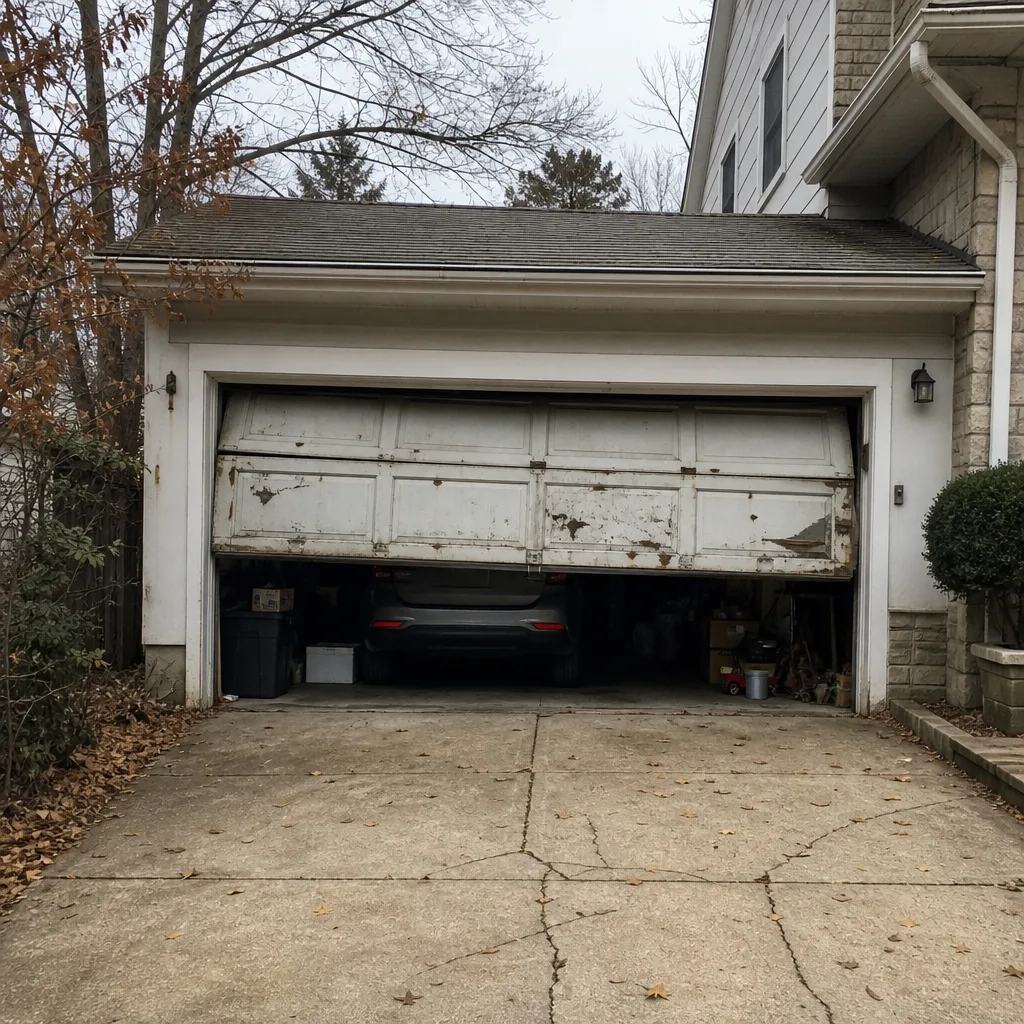 Before
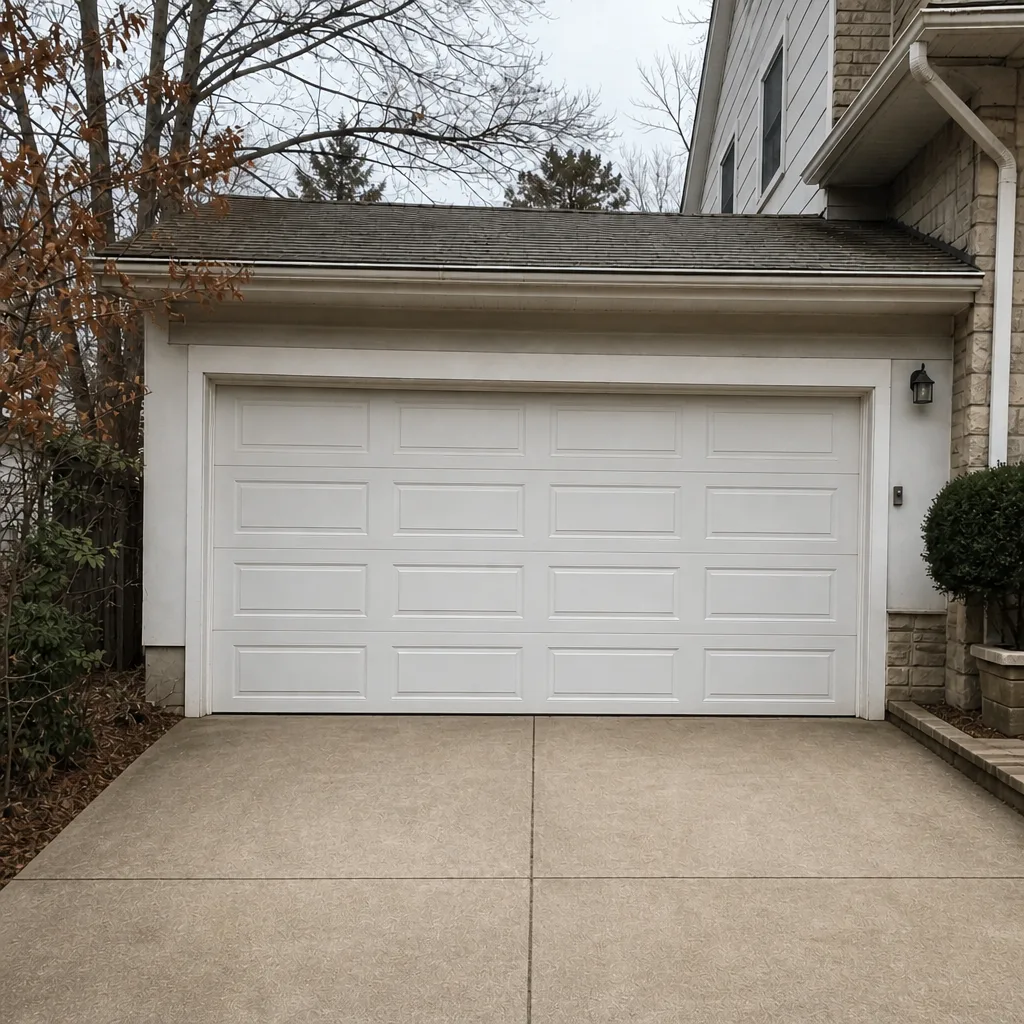 After
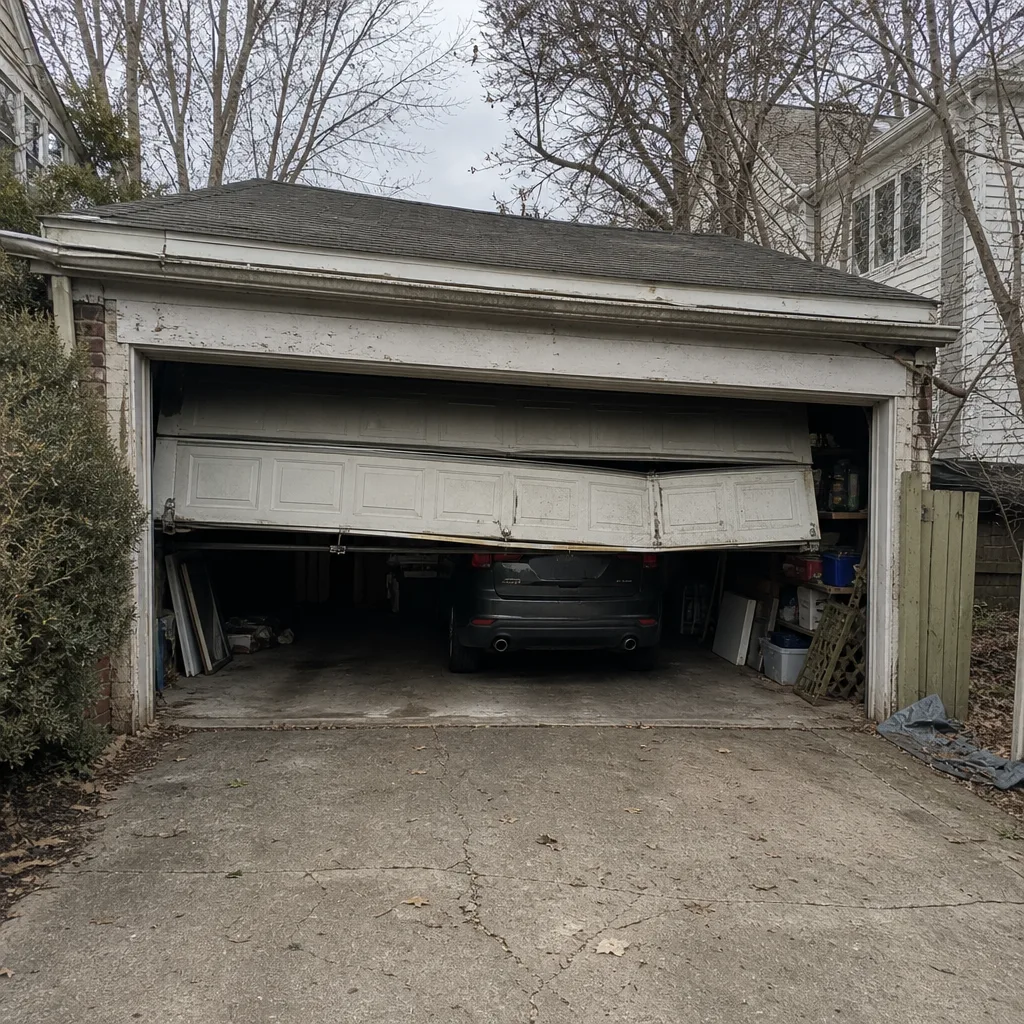 Before
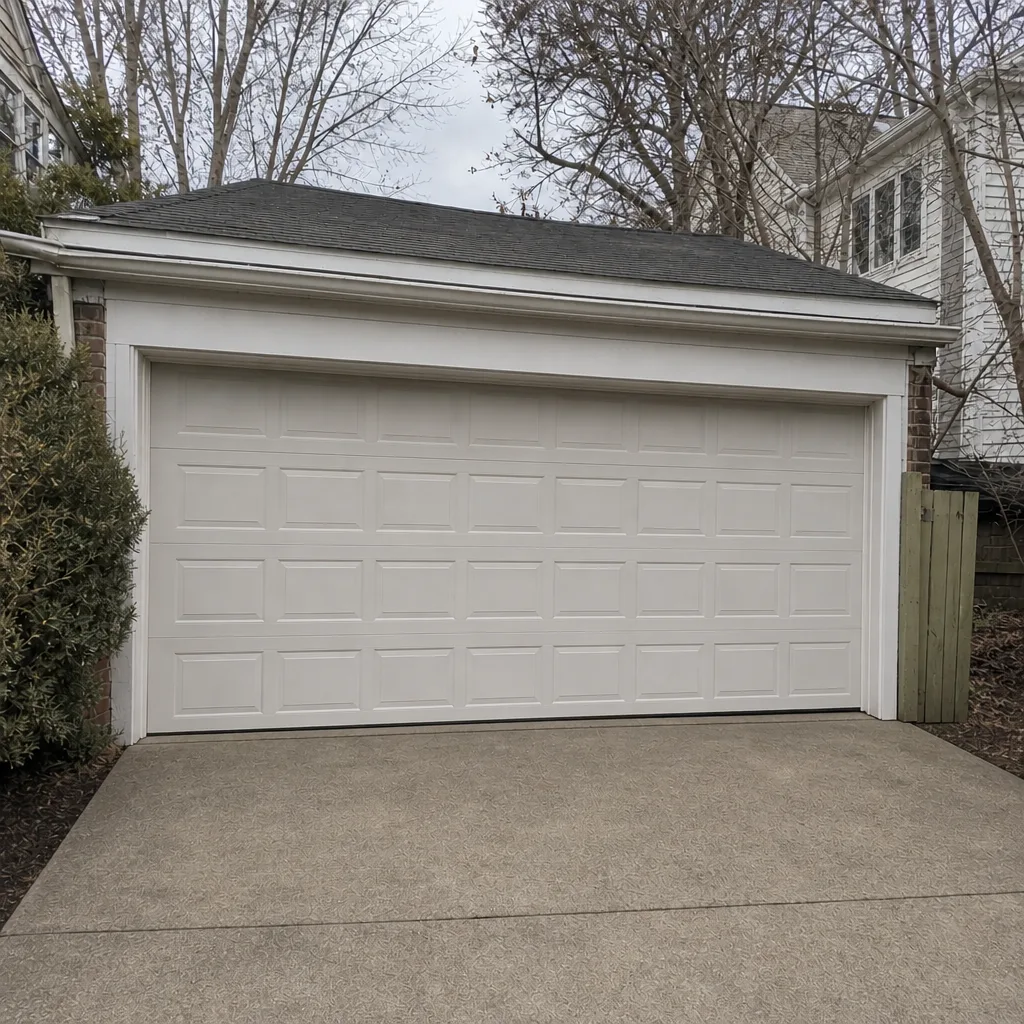 After
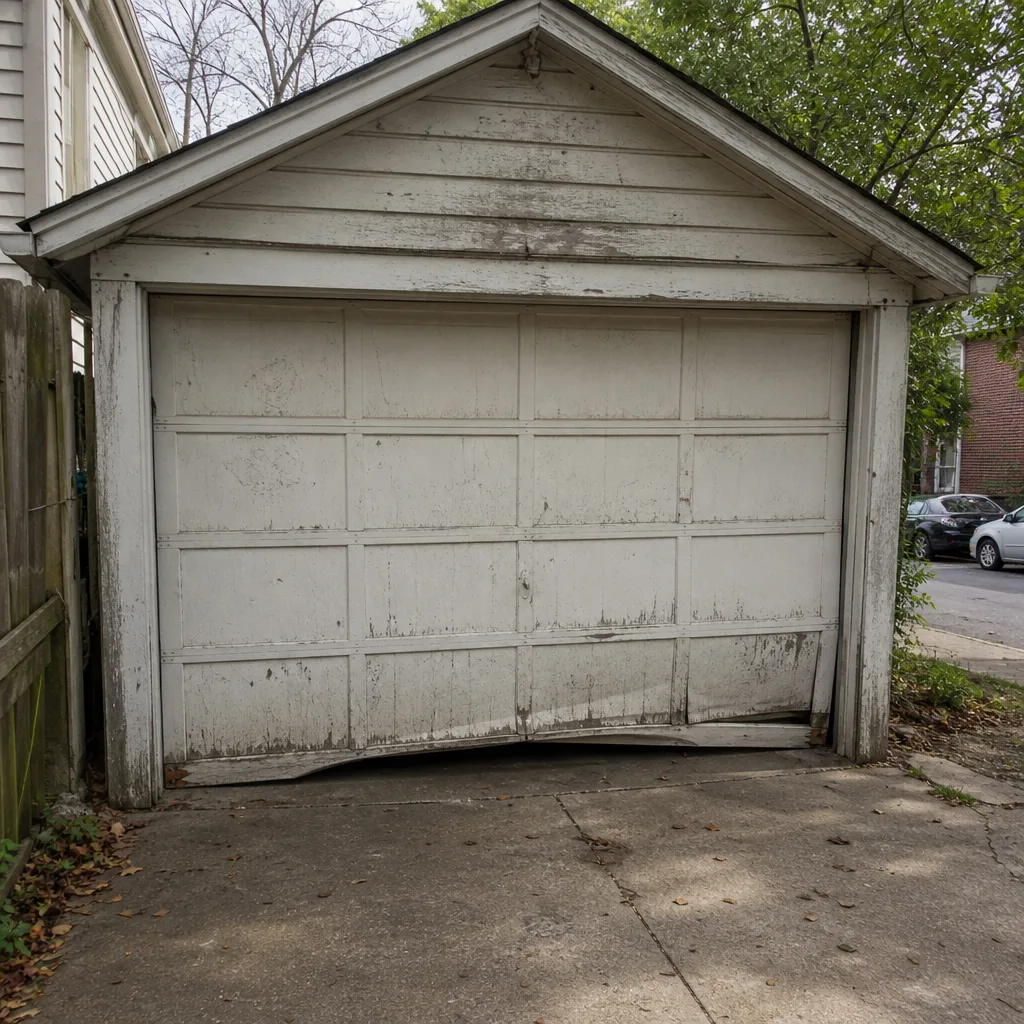 Before
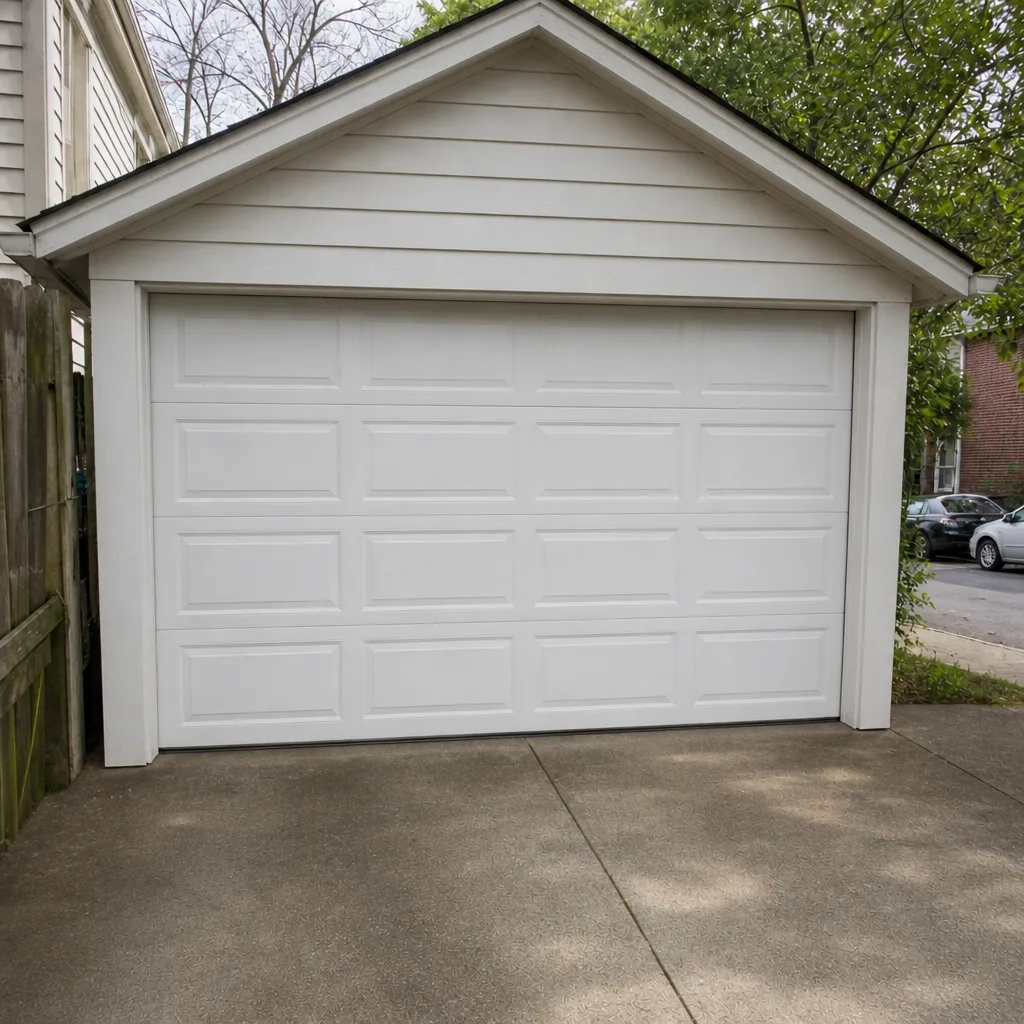 After
When to Call a Professional
Call a professional if the door is heavy to lift by hand, if the cables look frayed or kinked, if the door hangs crooked, if the spring has visibly broken, or if the door is stuck open or jammed shut. Those are the scenarios that put the door out of service and need a trained technician. Call today if the door is stuck open on an alley – a door that’s open and won’t close is a security and safety problem, and we book emergency service for exactly that.
Garage Door Repair Cleveland Park offers free estimates in Cleveland Park – call (833) 918-7067. We quote and agree the price before any work starts, and the written estimate sets the final price. No surprises once the door is on the ground.
Frequently Asked Questions
No. A door that reverses before fully closing is usually a spring tension issue, not a sensor. If you’ve cleaned the photo-eyes and the door still reverses, the spring is the first component to check. The second most common cause is a travel limit on the opener that’s drifted out of adjustment. Call us if you’re not sure which it is – we can tell quickly on-site.
Pull the red emergency release to disconnect the opener, lift the door by hand about a foot, and let it go. If the door stays up with light effort, the spring is likely fine. If it feels heavy or drops instead of holding, the spring has lost tension and the door should not be used. Never test a spring under load – the release test is the safe one.
Spring repair in this market typically runs from the range you’d expect for a single torsion spring, and a matched pair usually costs about twice that because the two are replaced together. Extension spring work sits in a similar range. The written estimate you get before the job starts sets the final price – there’s no surprise invoice once the work is done. Call (833) 918-7067 for an exact quote.
Yes. Running the opener on a broken spring forces the motor to lift the entire door weight, which burns the gear and can strip the drive. If the spring has failed, stop using the door and call us. Fixing the opener later is more expensive than fixing the spring now.
A crooked door means one side isn’t lifting the same as the other. The most common cause is a broken or weakened spring on one side, or a stretched cable on the opposite side. On older Cleveland Park detached garages, foundation settling and header flex can also throw the track out of line. The only way to know which it is, is to look at the door on-site.
Most garage door repairs in this market fall into a moderate range, depending on which components are involved. A single roller swap and a full opener replacement sit at very different points on the scale, and the estimate you get before work starts tells you which one applies. Call us for a free estimate – we’ll give you a written price before we touch the door.
No. We quote the price and agree it before any work starts, and the written estimate sets the final price. If we find something else while we’re in there, we’ll tell you what it is and let you decide before we do anything else.
The local professional we connect you with is licensed and insured as their state requires. Our technicians have up to 11 years of experience, including spring and opener work. If you’d like to see credentials before we start, ask – we’ll tell you what’s in place for your job.
If a warning sign shows up on your door and you want a second opinion before you act, our garage door repair service covers on-site evaluation and the repair that follows. Same company, no handoff to a generalist.
The Bottom Line
Warning signs matter because they tell you which component is failing, not just that something is wrong. A reversing door usually points to a spring, not a sensor. A single bang with no movement means a snapped spring and a door that shouldn’t be touched. A crooked door in an older Cleveland Park garage can mean a spring, a cable, or a structural shift from settling. The decision boils down to three buckets: stop using the door, book within 48 hours, or add it to the next maintenance visit. If you can’t tell which bucket your symptom belongs in, that’s a fine reason to call.
Contact
If your door is showing any of the warning signs in this guide, call Garage Door Repair Cleveland Park at (833) 918-7067 for a free estimate. We’ll tell you what we see, quote the price before any work starts, and either fix it on the visit or schedule it with a clear timeline. Free estimates, upfront pricing, and a satisfaction guarantee on our work.
Written by the team at Garage Door Repair Cleveland Park.