Last updated November 21, 2026
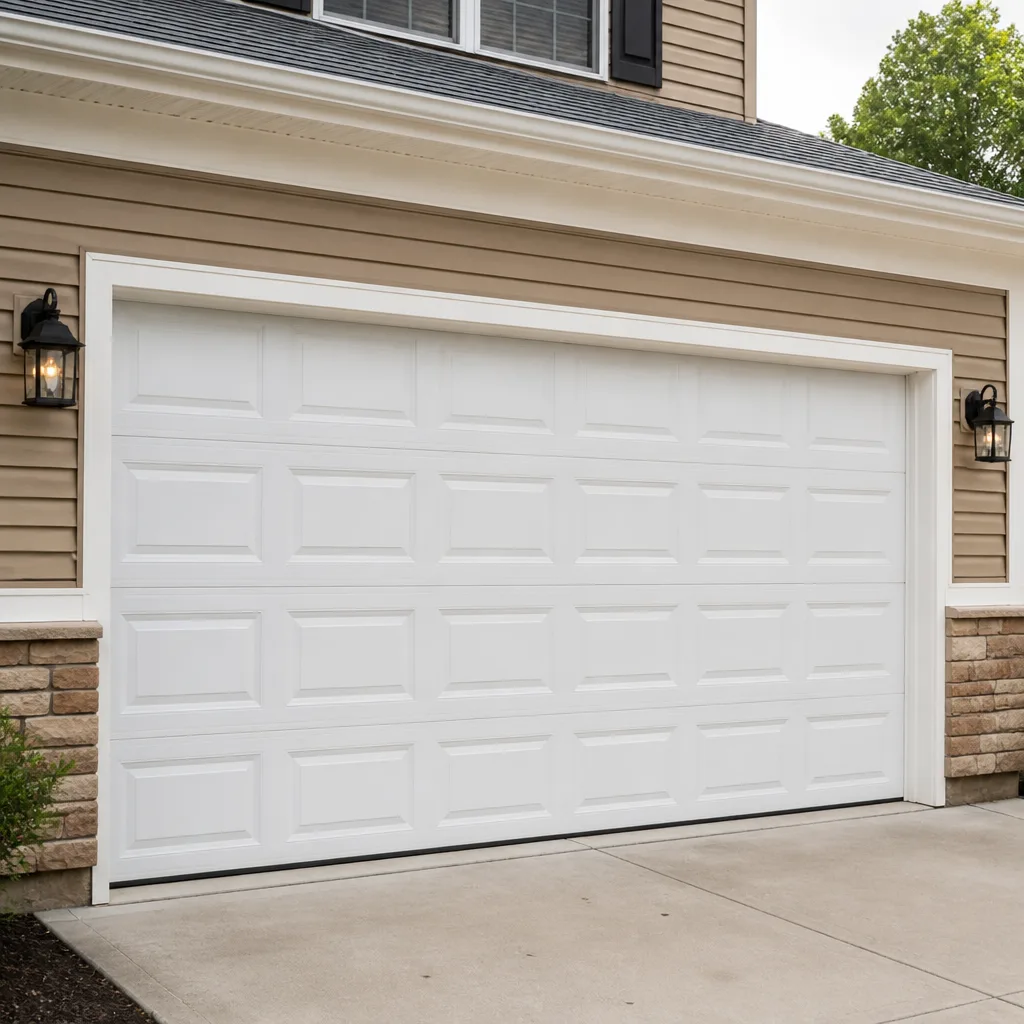 Raised-panel steel
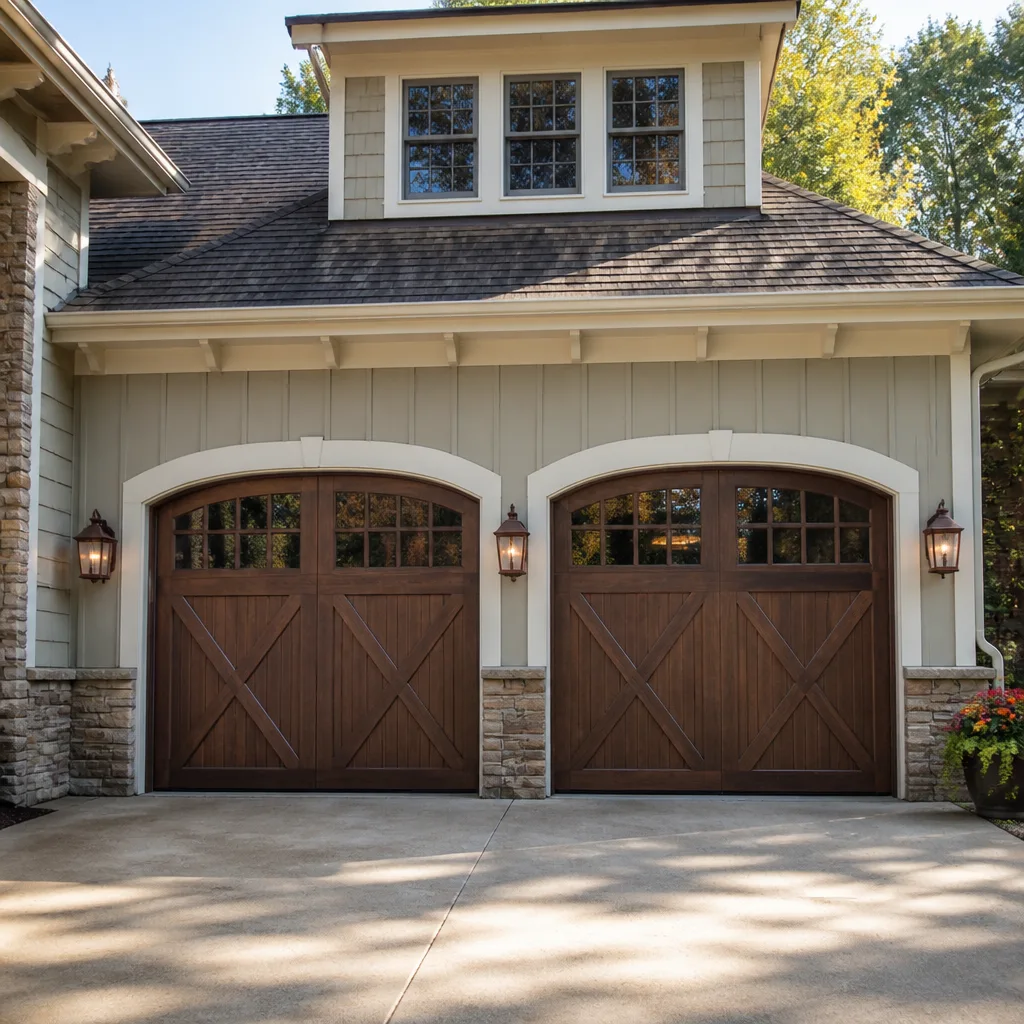 Carriage house
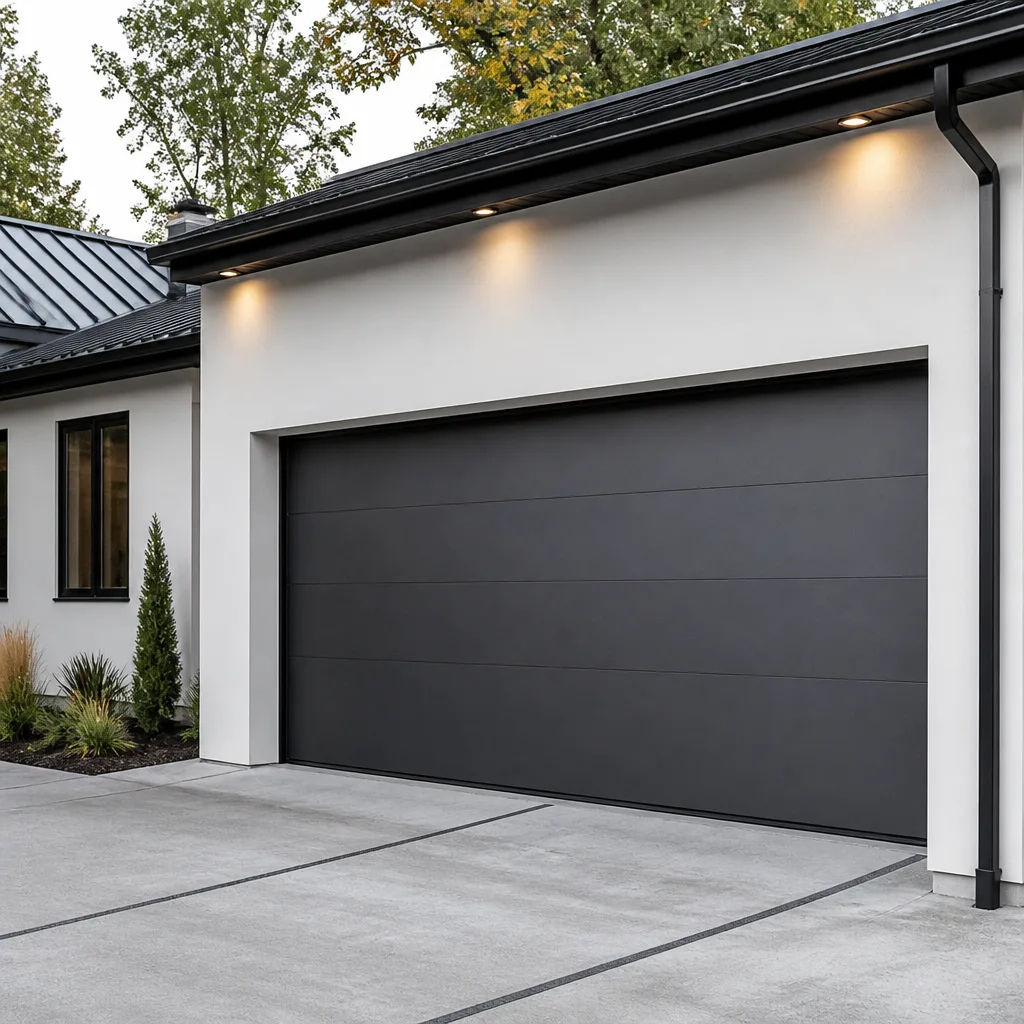 Modern flush
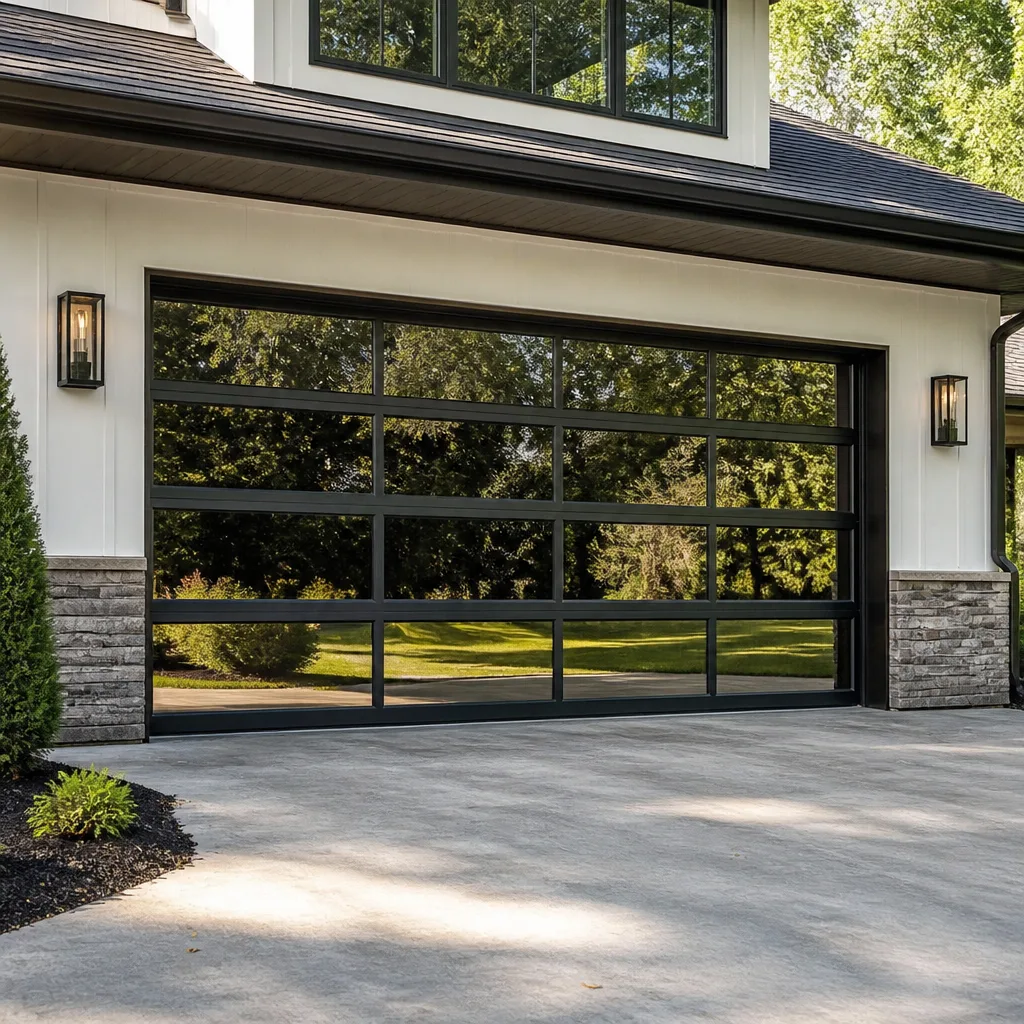 Full-view glass
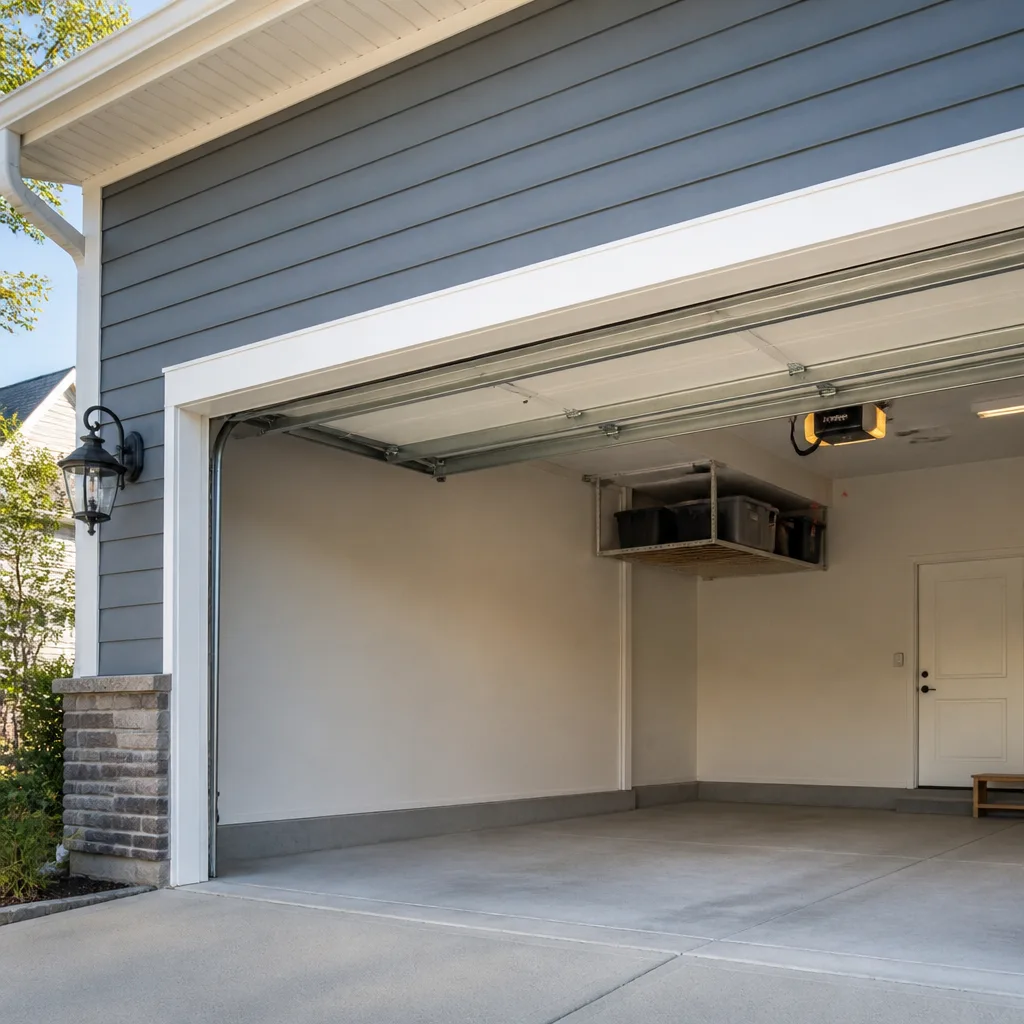 LiftMaster openers
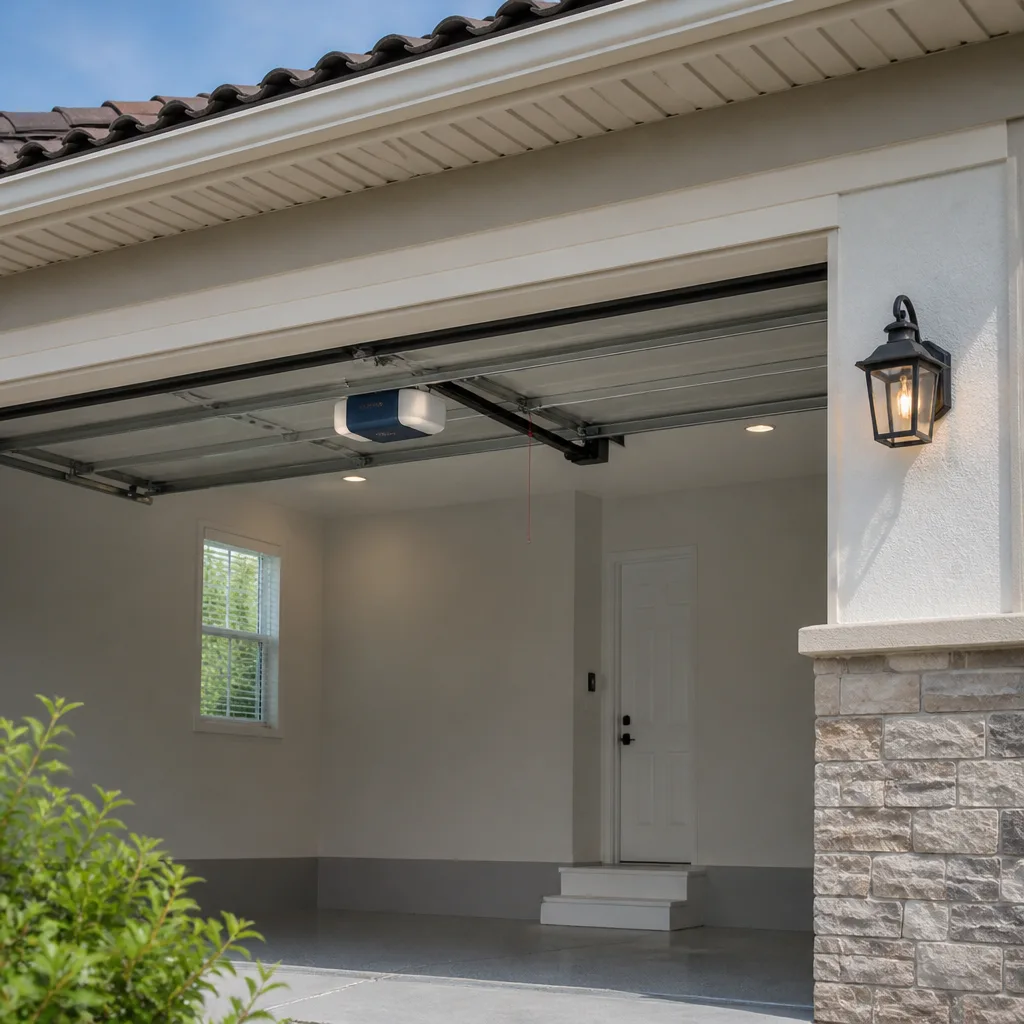 Chamberlain openers
Full 25-point door and opener safety check with every visit - springs, cables, rollers, tracks, and your LiftMaster or Chamberlain opener included
You get a price before we start. It does not change when the pro arrives.
Get your free estimateHow to Hire a Garage Door Contractor in Cleveland Park: A Step-by-Step Guide
A contractor licensed in Maryland can legally work on your Cleveland Park garage door, and their liability insurance may not cover a DC-jurisdiction claim. That gap almost never comes up during the estimate. It surfaces later, when a spring lets go and someone gets hurt or a door comes down on a car and the insurance carrier starts asking which jurisdiction the policy was written for. Most hiring guides assume a suburban driveway, a wide street, and a contractor who showed up in a marked van. Cleveland Park doesn’t work that way. Alleys are tight, parking is a negotiation, and the difference between a specialist and a handyman with a door added to his list matters more here than almost anywhere. This guide covers the verification steps, the diagnostic questions, and the contract language that filter out the wrong candidates quickly.
Quick Answer
To hire a garage door contractor in Cleveland Park, verify DC contractor licensing and DC-jurisdiction insurance before anything else, ask five diagnostic questions that reveal whether the contractor is a true specialist, and compare written scope and warranty terms instead of comparing three raw prices. A legitimate specialist will answer brand-specific questions about your LiftMaster or Wayne Dalton system without hesitation and will put spring specifications in writing. If a candidate can’t do those two things, keep looking. Our team at Garage Door Repair Cleveland Park is happy to walk you through what to ask – call (833) 918-7067 for a free estimate.
Styles & brands we work with
- Raised-panel steel
- Carriage house
- Modern flush
- Full-view glass
- LiftMaster openers
- Chamberlain openers
Table of Contents
- How Do You Verify a Garage Door Contractor’s License in DC?
- What Five Questions Separate a Specialist From a Handyman?
- Why Do Three Quotes Often Backfire on Spring and Opener Work?
- How Do You Handle Alley Access and Parking for a Service Call?
- What Are the Urban Red Flags Specific to DC Service Calls?
- How Should You Structure a Service Agreement for One Repair vs. Ongoing Work?
- What Warranty Language Should You Insist On?
- How Does the Housing Stock in Cleveland Park Affect the Job?
How Do You Verify a Garage Door Contractor’s License in DC?
Verify a garage door contractor’s DC license by checking the contractor’s registration with the DC Department of Licensing and Consumer Protection (DLCP), then confirming the insurance certificate names DC as a covered jurisdiction. A Maryland or Virginia license does not automatically authorize work in DC, and insurance policies are often written state by state. That second step is the one homeowners skip.
Here’s how to do it properly:
- Ask for the DC Basic Business License number. A legitimate contractor working in Cleveland Park has one. If they only offer a Maryland or Virginia number, ask directly whether they hold a DC license.
- Look the license up yourself on the DLCP site. Don’t rely on a screenshot. Expired licenses show up as expired, and a lapse in coverage on the license is a real signal.
- Request a certificate of insurance. The certificate should name a general liability policy, list the coverage limits, and confirm DC as a covered state. If the policy is written only for Maryland, ask for the endorsement that extends coverage to DC jobs.
- Confirm workers’ compensation coverage. If a technician is injured on your property and the contractor doesn’t carry workers’ comp, the claim can land on your homeowner’s policy.
- Keep copies. If a claim is ever filed, you want the certificate on file alongside the written estimate.
The reason this matters more in Cleveland Park than in a lot of places: the neighborhood sits close enough to the Maryland line that plenty of Maryland-based contractors do DC work, and plenty of them have policies that don’t extend into DC. In our experience, the honest ones will say so and update the policy. The ones who wave it off are the ones you don’t want on your roof beam.
For anything spring- or opener-related, also read up on garage door repair before the estimate so you know what the job actually involves.
What Five Questions Separate a Specialist From a Handyman?
Five questions separate a specialist from a handyman: spring type and wire gauge, opener brand and logic board behavior, balance and track alignment, hardware torque specifications, and how the contractor diagnoses a door that opens but doesn’t close. A true specialist answers all five with specifics. A generalist deflects, generalizes, or pivots to “we’ll figure it out on site.”
The five questions, and what a good answer sounds like:
- “What spring type does my door use, and what’s the wire gauge?” A torsion spring sits above the door on a shaft; extension springs run along the horizontal tracks. The answer should name which one, and the specialist should tell you they’ll measure wire gauge and door weight to match the replacement. Vague answer (“standard spring”) equals walk away.
- “Can you tell me what brand and model my opener is, and what the symptoms usually mean for that model?” A specialist familiar with LiftMaster, Chamberlain, Genie, Craftsman, Wayne Dalton, Raynor, Clopay, or Amarr will name the model quickly and describe the logic board behavior. Watch for whether they mention garage door opener repair as a distinct diagnostic track separate from the door hardware.
- “How do you check balance and track alignment before you touch the opener?” A door that’s badly out of balance will burn out openers faster than anything else. The specialist should describe a balance check with the opener disengaged, and track alignment as a separate step.
- “Do you torque hardware to spec, or run bolts down by feel?” Genuine specialists talk about torque values for hinges, rollers, and brackets. Handymen tend to say “we tighten everything up.”
- “Walk me through how you’d diagnose a door that opens fine but won’t close.” The answer should reference safety sensor alignment, the logic board’s travel limits, and force settings – in that order. Not “we’d replace the opener.”
A confident specialist answers these in plain language and doesn’t need to look them up. If a candidate fumbles three of five, that’s your answer. For more on what competent work looks like, the Garage Door Repair Cleveland Park reference covers what each repair actually involves.
Why Do Three Quotes Often Backfire on Spring and Opener Work?
Three quotes backfire on spring and opener work because raw price comparison strips out scope, spring quality, and warranty, and those three variables drive most of the difference between quotes. The $80 quote is often an unlisted-brand spring with a thirty-day warranty; the $280 quote is a matched domestic spring with a multi-year parts warranty. They’re not the same job.
What to compare instead:
- Spring type and cycle rating. Standard-cycle vs. high-cycle springs differ in lifespan and price. Ask for the cycle rating in writing.
- Matched pair vs. single spring. When one spring on a matched pair breaks, the other is usually near end of life. Replacing both is standard practice; ask whether the quote reflects that.
- Wire gauge and length. Written specifications, not vague “we’ll use the right spring.”
- Opener model and rail type. Belt drive vs. chain drive vs. screw drive, and the specific opener model number.
- Warranty split. Labor warranty and parts warranty are separate. Know what’s covered for how long.
- Disposal and haul-away. Old door, old springs, old opener – confirm whether removal is included.
- Price agreement timing. A written estimate agreed before work starts is the price. Any contractor who won’t commit in writing is a risk, not a bargain.
The garage door industry prices spring work per spring. If a technician replaces both springs on a matched pair, expect roughly twice the single-spring rate. If a quote says “pair” but shows a single-spring price, ask. Either the quote is wrong or the scope is.
For a replacement job instead of a repair, the same logic applies to comparing garage door installation proposals – compare door model, R-value, insulation, and warranty, not square-foot price.
How Do You Handle Alley Access and Parking for a Service Call?
Handle alley access in Cleveland Park by confirming with the contractor, before the appointment, which alley or driveway the service vehicle will use, where the technician will park, and whether the door is accessible from the alley side or the street side. Many Cleveland Park homes have garages off rear alleys, and the technician needs enough clearance to bring in tracks, springs, and a full door when necessary.
Practical steps that avoid a wasted visit:
- Send photos of the alley approach ahead of time. Width, turns, overhead obstructions, and gate clearance all matter. A few photos save an hour of negotiation on site.
- Confirm the technician’s vehicle type. A standard service van fits most Cleveland Park alleys. A box truck sometimes doesn’t.
- Gate access and codes. If the rear garage is behind a locked gate, confirm how the technician gets in.
- Parking permits if the street side is the only approach. Some blocks require visitor permits. Ask the contractor whether they’ll handle it or whether you need to arrange ahead of time.
- Note any overhead lines, low branches, or tight corners. Anything that might block a door panel from being carried in.
Vague arrival windows are a red flag, not a fact of life. A specialist should give you a window and a heads-up call before arrival. In a dense neighborhood like Cleveland Park, the contractor who can’t say how they’ll approach the alley is the contractor who’ll arrive, look at the alley, and reschedule.
What Are the Urban Red Flags Specific to DC Service Calls?
The clearest urban red flags in DC are vague arrival windows, refusal to put spring specifications in writing, pressure to replace rather than repair, and a reluctance to discuss DC-jurisdiction insurance. Any one of these on its own is a caution. Two or more is a stop sign.
The full red-flag list:
- Vague arrival windows. “We’ll be there between nine and five” is not a window. It’s a guess.
- No written spring specifications. If the estimate doesn’t include spring type, wire gauge, cycle rating, and whether it’s a single spring or a matched pair, walk.
- Pressure to replace the whole door on a repairable problem. Sometimes replacement is right. A specialist explains why. A salesperson leads with “you need a new door” on the first visit.
- No DC license or DC-scoped insurance. Covered above – ask for the certificate and keep it.
- “We do everything” marketing. A general handyman who added garage doors to a services list is not a specialist. The five diagnostic questions will expose it.
- Cash-only and no paper trail. Written estimate, written invoice, written warranty. No exceptions.
- No discussion of safety. Any contractor who talks about springs without mentioning the danger isn’t talking about the actual job.
One more for Cleveland Park specifically: hesitation about the alley approach. A contractor who doesn’t ask about access before the appointment hasn’t thought through the visit.
How Should You Structure a Service Agreement for One Repair vs. Ongoing Work?
Structure a single-repair agreement with a written scope, a written price, and a written warranty, agreed before work starts. Structure an ongoing relationship with a documented service history, consistent diagnostic records, and clear terms for how future visits are quoted. Both start with the same document, but the ongoing relationship adds records.
For a single repair:
- Written scope listing what’s being replaced and what isn’t.
- Written price, called out as an estimate or a fixed quote, with the understanding the written figure is what’s paid.
- Written warranty on parts and labor, with duration for each.
- Sign-off sheet showing what was checked and what was left in place.
For an ongoing relationship:
- All of the above, plus a service history file recording what was replaced and when.
- Spring cycle ratings that carry forward – so the next technician knows what’s on the door.
- Brand-specific records if you have a LiftMaster or Raynor opener, since logic board behavior varies by model.
- Terms for how future visits get quoted – written estimate agreed before work starts, every time.
The reason we recommend an ongoing relationship rather than one-off visits: the door, springs, opener, and hardware work as a single system. When one contractor handles the door and a different one handles the opener, diagnosis gets split in ways that cost you time. That’s why we cover the whole system under one relationship – Garage Door Repair Cleveland Park is the reference point for what that looks like in practice.
What Warranty Language Should You Insist On?
Insist on separate written warranties for parts and labor, with explicit durations, exclusions, and who honors the warranty. A single line that says “fully warranted” tells you nothing. A warranty that specifies “five years parts, one year labor, excluding opener logic boards” tells you exactly what you’re getting.
Warranty points to nail down in writing:
- Parts warranty duration. Springs, hinges, rollers, and openers typically carry different warranty terms. Get each in writing.
- Labor warranty duration. Often shorter than the parts warranty. Know which is which.
- Who honors the warranty. The contractor, the manufacturer, or both. If a spring fails inside its warranty window, who is called, and who pays for the service call?
- Exclusions. Opener logic boards, remote controls, safety sensors, and photo-eye alignment often have shorter warranty windows. Make sure they’re spelled out.
- Transferability. If you sell the home, does the warranty carry? For a Cleveland Park property that may change hands, this is worth asking.
We’ve seen homeowners surprised by a “lifetime warranty” that turned out to cover only the torsion spring, not the labor, not the matched-pair partner, and not the service visit. A written warranty sheet with parts and labor broken out avoids that. Ask for it, keep it, and reference it when you call.
For a specific repair type and the warranties that usually apply to it, our team at garage door opener repair can explain what’s typically covered for each component.
How Does the Housing Stock in Cleveland Park Affect the Job?
The housing stock in Cleveland Park affects the job because most homes here have older garages with rear-alley access, wider single-door openings, and wood-frame construction that can shift over decades. That means door weight, track alignment, and spring selection often need more careful measurement than a recent subdivision build would. The work is the same; the reading of the door is different.
Cleveland Park is a historic neighborhood with a lot of homes built in the 1920s through the 1940s. Garages from that era frequently show three patterns:
- Wider openings. Some Cleveland Park garages were built for wider cars, which means wider doors and different spring sizing than a modern single-car subdivision door.
- Wood framing that’s moved. Decades of DC summers and winters can warp door frames just enough that tracks need realignment, not just tightening.
- Older opener installations. Many homes still have earlier-generation LiftMaster or Craftsman openers mounted to framing that wasn’t designed for modern rail systems.
None of that makes a Cleveland Park garage door harder to service. It makes accurate measurement and follow-through more important. When we take a measurement for spring replacement, we measure wire gauge, door weight, and the exact travel so the spring is matched to the door, not “close enough.” If the door is being replaced rather than repaired, the measurement goes into the garage door installation order so the new door fits the existing opening on the first delivery.
We work on whatever system is already on the door – LiftMaster, Chamberlain, Genie, Clopay, Amarr, Wayne Dalton, Craftsman, or Raynor – not a substitute brand we bring with us. You keep the manufacturer’s parts and the manufacturer’s warranty path.
Common Mistakes to Avoid
- Hiring a Maryland-licensed contractor without confirming DC insurance. A Maryland license doesn’t authorize DC work, and a Maryland-scoped policy may not cover DC claims. Ask for both.
- Comparing three quotes by headline price alone. Spring and opener work varies in spring quality, cycle rating, and warranty. Same-job quotes are only comparable when scope matches.
- Skipping the five diagnostic questions. Handymen can talk a good game on the phone. The diagnostic questions are what separate specialists from generalists in three minutes.
- Accepting a verbal price. A written estimate, agreed before work starts, is the price. Anything else is a wish.
- Letting a single bad spring go. On a matched pair, one failing spring usually means the other is close behind. Replacing one and waiting is often more expensive in the long run.
- Ignoring the alley. If the contractor hasn’t asked about access before the visit, they haven’t planned the visit. Confirm approach and clearance in advance.
- Forgetting to check safety sensor alignment. A door that closes on a car or a child is a serious problem. Sensors should be tested after any opener work, not just installed.
See the difference
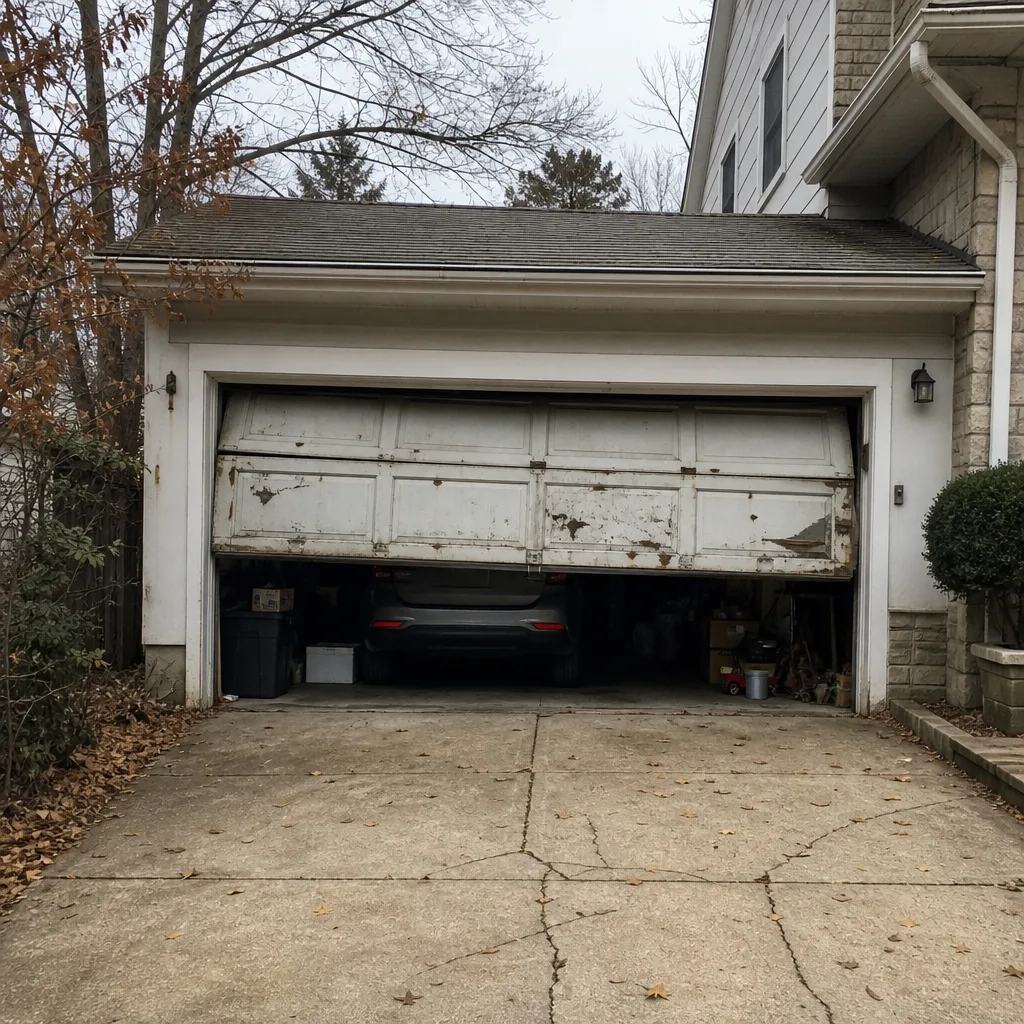 Before
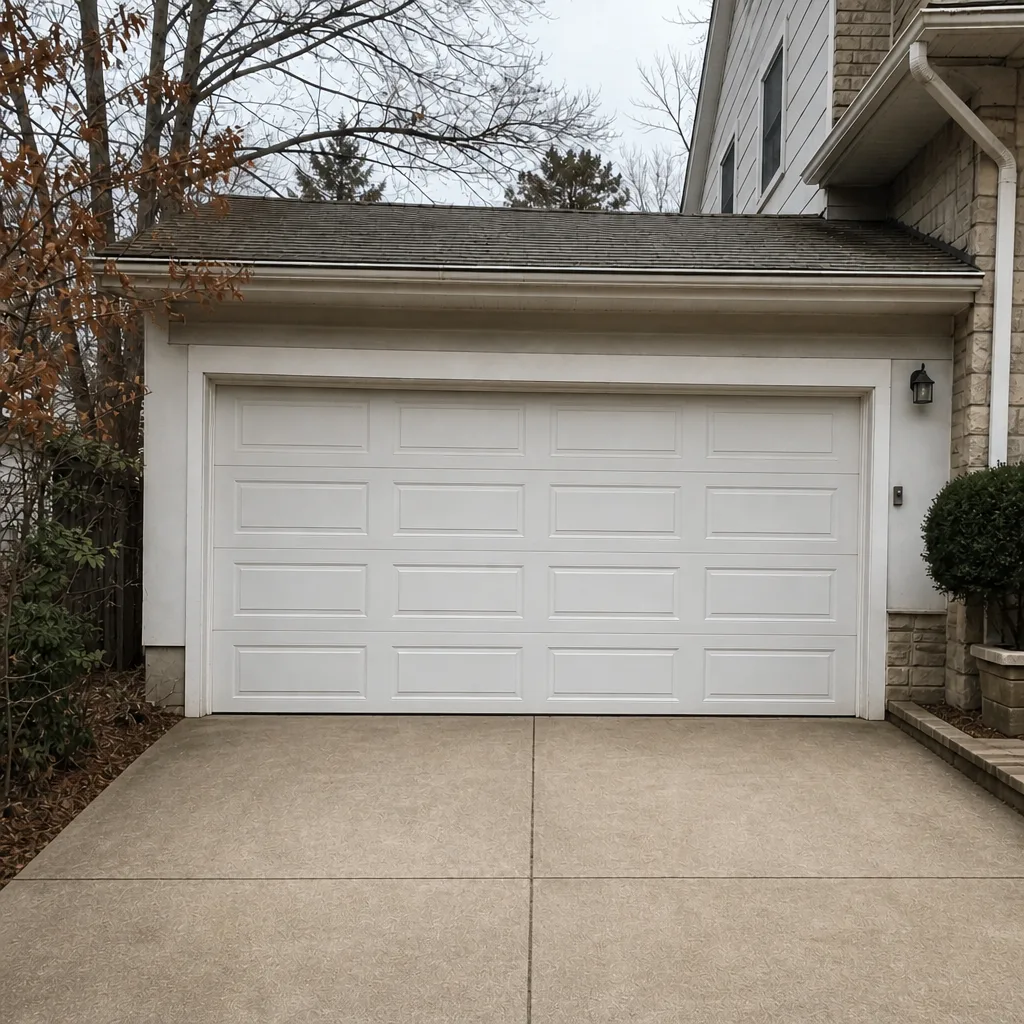 After
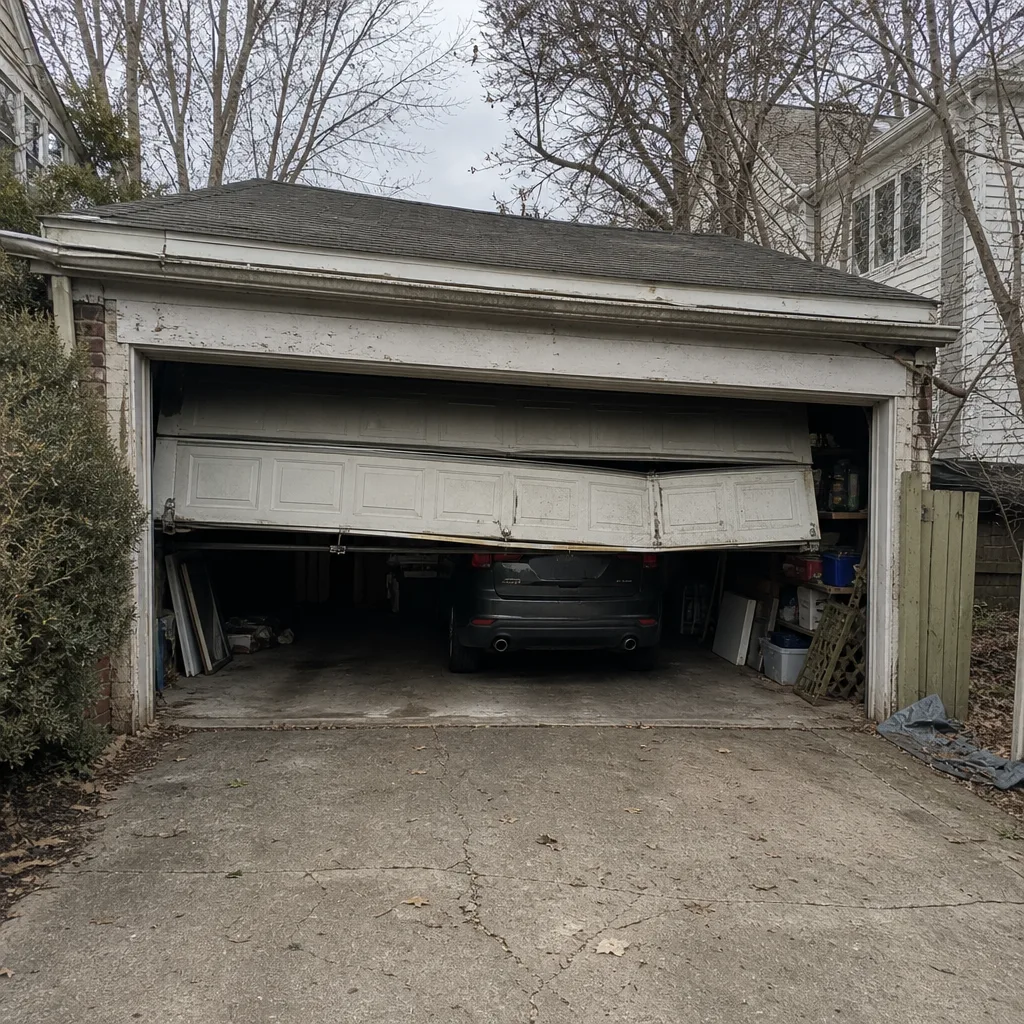 Before
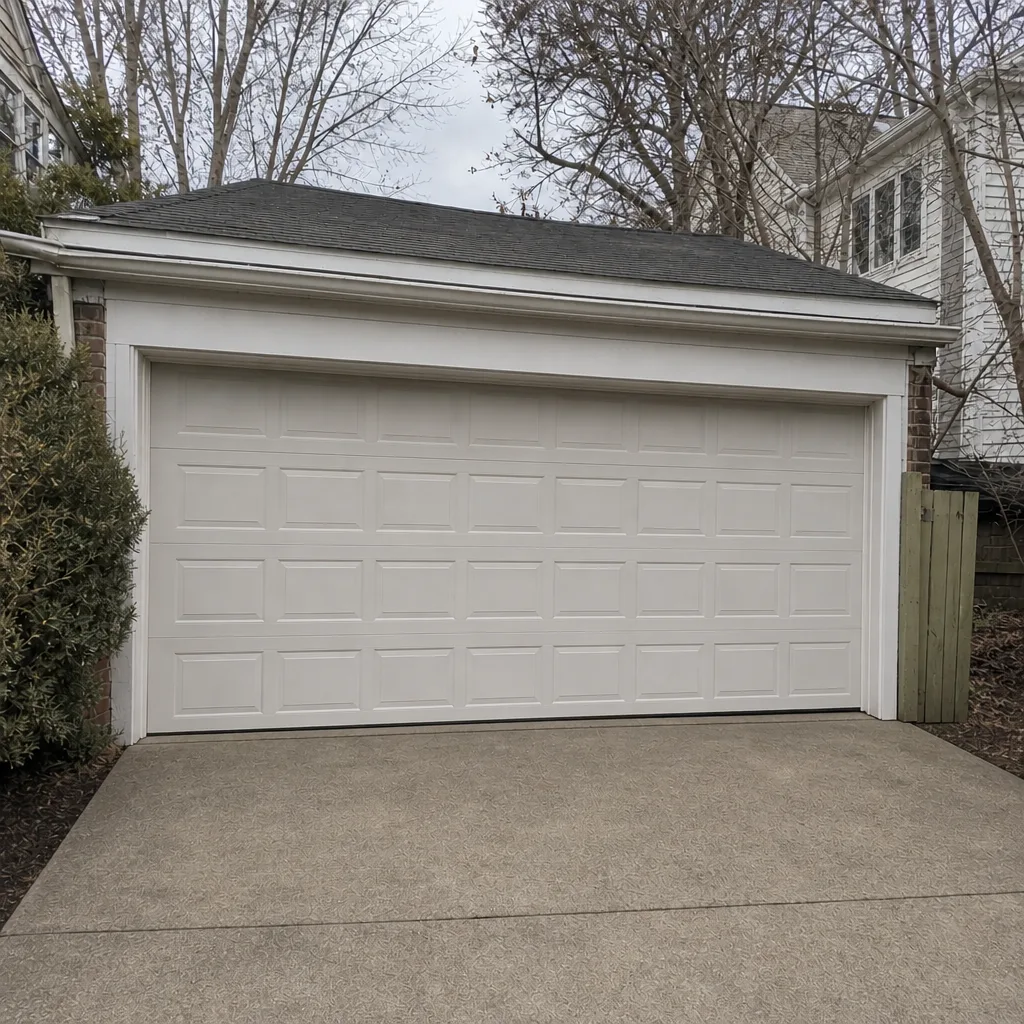 After
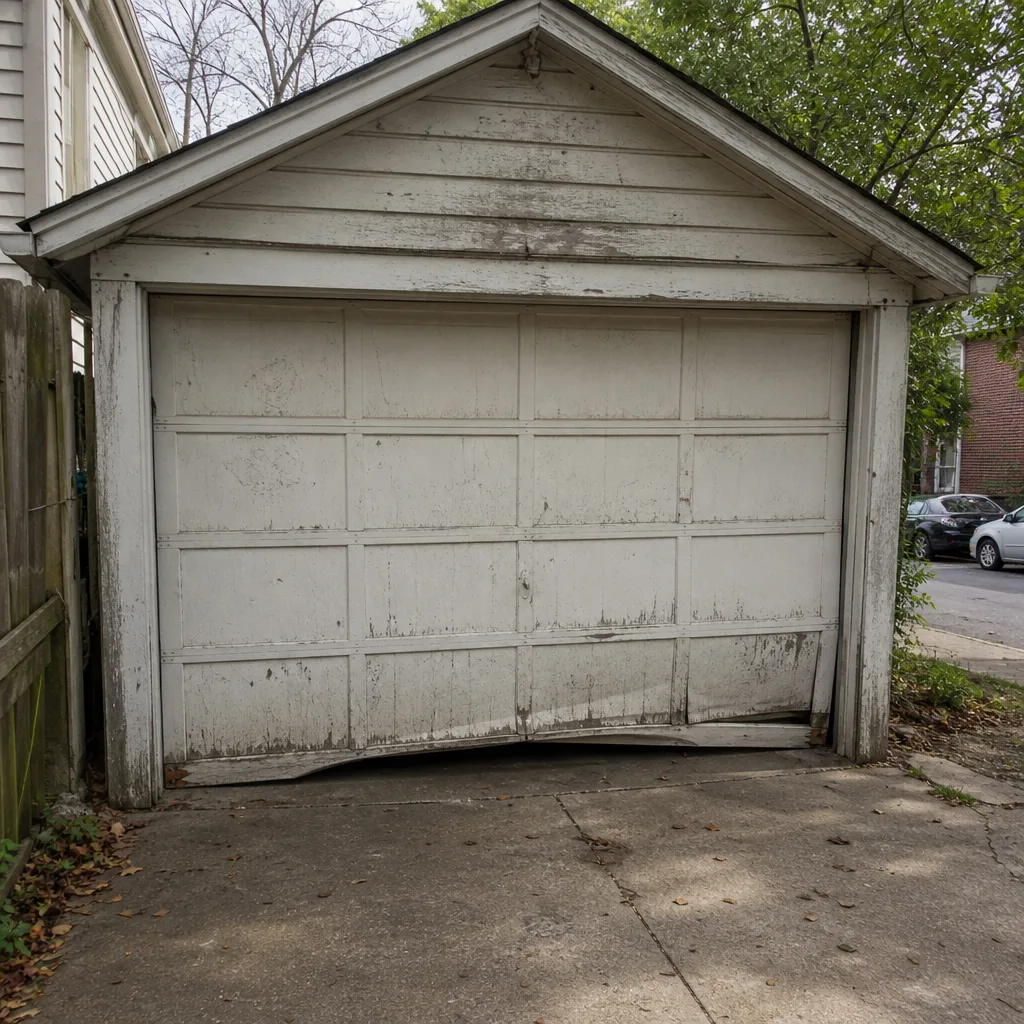 Before
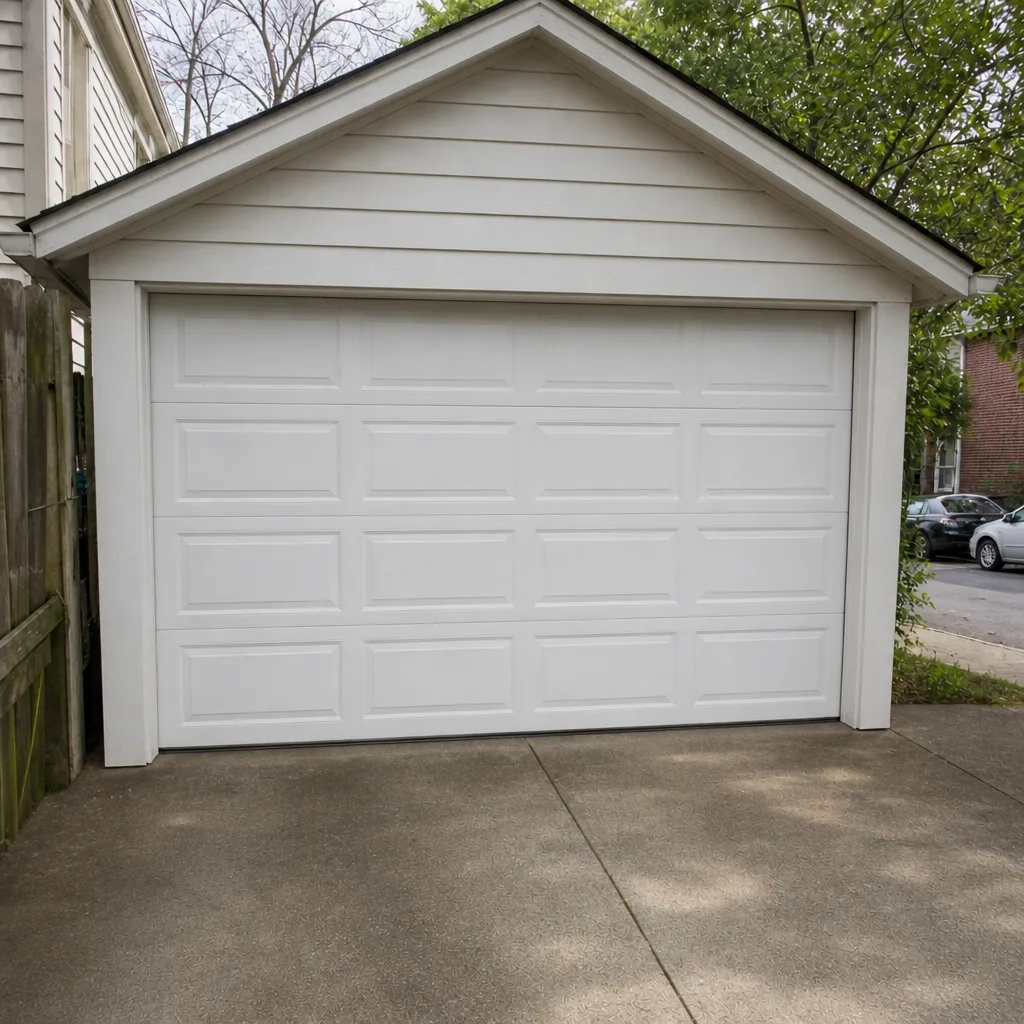 After
When to Call a Professional
Call a professional for anything involving torsion or extension springs, opener logic boards, track realignment, panel replacement, or a door that won’t move. Torsion springs are under heavy tension and can cause serious injury if handled without the right tools and training – this is not a job to attempt without qualification. Same for opener wiring, which ties into household electrical circuits.
Also call when the door is stuck open. An open garage door in Cleveland Park leaves the entire contents of the garage exposed to the alley. Emergency service is a real category – we respond to doors jammed shut and stuck open as a priority, alongside the scheduled work. Reach us at (833) 918-7067.
And call before the door breaks, if it’s already showing signs – slow response, grinding, uneven travel, or a gap at the bottom when closed. Small diagnostics now beat emergency calls later.
Garage Door Repair Cleveland Park offers free estimates in Cleveland Park – call (833) 918-7067.
Frequently Asked Questions
Yes, you need a contractor with a DC contractor license to perform work in Cleveland Park, and their liability insurance needs to cover DC-jurisdiction claims. A Maryland or Virginia license alone doesn’t authorize DC work, and an insurance policy written only for Maryland may not pay a DC claim. Ask for the DC license number and the certificate of insurance, then verify both.
Ask the five diagnostic questions: spring type and wire gauge, opener brand and logic board behavior, balance and track alignment procedures, torque specifications, and how they’d diagnose a door that opens but won’t close. A specialist answers all five specifically and in plain language. A generalist deflects, generalizes, or says “we’ll figure it out on site.” If they fumble three of five, keep calling. Call (833) 918-7067 if you want to test us against those questions.
Three quotes backfire on spring work because headline pricing strips out the variables that actually drive safety and lifespan – spring type, wire gauge, cycle rating, whether it’s a single spring or a matched pair, and labor versus parts warranty. Compare written scope and warranty, not raw numbers. A specialist will show you the difference in writing; a quote-shop won’t. Call (833) 918-7067 for a written scope comparison – the estimate is free.
Emergency garage door service is a named part of what we do, and a door stuck open or jammed shut is treated as a priority. Exact same-day availability depends on the day and current schedule, so call (833) 918-7067 and we’ll give you the real window. We don’t promise a response time we can’t hit.
No – the written estimate is agreed before any work starts, and that written figure is the price. If we discover something during the visit that would change the scope, we stop and re-quote before touching anything. You should never get an invoice larger than the quote you approved. That applies to spring work, opener work, and installation alike.
Whoever works on your door should be familiar with the brand you actually own – that means LiftMaster, Chamberlain, Genie, Clopay, Amarr, Wayne Dalton, Craftsman, or Raynor, at minimum. Brand-specific familiarity matters because logic board behavior, rail systems, and spring mounting differ by manufacturer. Our technicians have up to 11 years of experience across those eight brands. Call (833) 918-7067 for a free estimate on any brand you have.
The Bottom Line
Hiring a garage door contractor in Cleveland Park starts with two verifications before the estimate: DC licensing and DC-scoped insurance. Then it moves to the diagnostic questions, which separate specialists from handymen in one conversation. From there, compare written scope and warranty rather than headline price, confirm alley access in advance, and lock in a written price agreed before work starts. The best signal of a good contractor is that they put everything in writing and don’t flinch when you ask. That’s the standard we hold ourselves to at Garage Door Repair Cleveland Park.
Call (833) 918-7067 for a free estimate – we’ll walk you through the questions, put the scope and price in writing, and show you the spring specifications before we start.
Written by the team at Garage Door Repair Cleveland Park.